
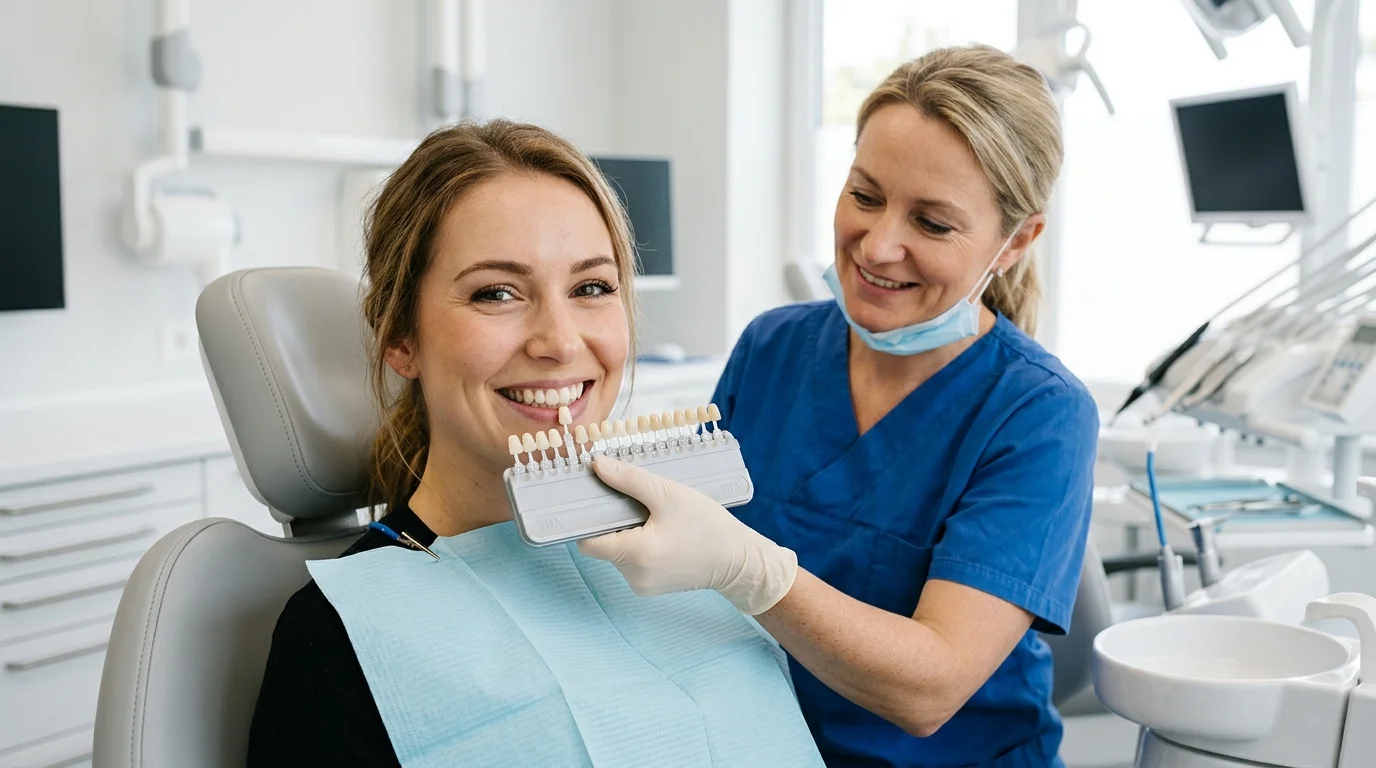
Your natural tooth is still there alive, intact, and functioning underneath a veneer. To make room for the thin porcelain or composite shell, a dentist removes a small amount of enamel from the front surface, usually less than half a millimeter, about the thickness of a fingernail. The root, nerve, and inner structure of the tooth are completely untouched. Veneers don’t replace your tooth; they cover the front of it.
The real question people are usually worried about is whether this “ruins” their real teeth. It doesn’t as long as a few things go right, both during the procedure and afterward.
What Actually Happens to the Tooth, Step by Step
Before prep: Your tooth has its full, natural enamel layer smooth, hard, and protective.
During prep: Your dentist lightly buffs the front surface to remove a thin layer of enamel, creating both room for the veneer and a slightly textured surface for it to bond to. This is done under local anesthetic and is generally not painful.
Right after prep: The tooth is more sensitive than usual since a protective layer of enamel is temporarily gone. Temporary veneers are placed immediately to protect it while your permanent ones are made.
After the veneer is bonded: The permanent veneer is cemented on with a strong adhesive. From that point on, the natural tooth nerve, blood supply, root, and all sits fully intact underneath, doing exactly what it always did: supporting your bite and chewing.
Does Removing Enamel Damage the Tooth?
Removing enamel is a real, permanent change it’s fair to be cautious about that. But a small, evenly-removed layer doesn’t compromise the tooth’s strength or function. Problems come from how much is removed and how well it’s done, not from the concept of enamel removal itself. This is why choosing an experienced dentist matters more for veneers than almost any other cosmetic procedure technique is what separates “thin protective shell” from “permanently sensitive tooth.”
If you want to avoid enamel removal altogether, minimal-prep or no-prep veneers (like Lumineers) exist for certain cases, though they’re not suitable for every tooth or every cosmetic goal your dentist can tell you if you’re a candidate.
Can the Tooth Under a Veneer Still Get a Cavity?
Yes. This is the part people most often assume isn’t true. The veneer itself can’t decay porcelain and composite aren’t organic material but the natural tooth underneath absolutely can, especially:
- Along the edges where the veneer meets your natural tooth
- At the gumline, where plaque naturally collects
- On the back of the tooth, which veneers don’t cover at all
Decay under a veneer can also be sneaky, since you can’t always see it forming the way you would on an unveneered tooth. Watch for new sensitivity, a dark shadow near the veneer’s edge, or gum swelling around it those are signs to get it checked rather than wait for your next cleaning.
What Happens If a Veneer Comes Off or Is Removed?
This is the part almost nobody covers, and it’s often the real underlying worry. If a veneer is removed whether it fails, chips beyond repair, or you simply decide not to replace it the tooth underneath doesn’t grow its enamel back. The area where enamel was removed will be permanently thinner and rougher-looking than the rest of your tooth, and it will likely be more sensitive and more visually different in color/shape than your other teeth. This is why veneers are considered a long-term commitment rather than a trial run in almost all cases, once you prep a tooth for a veneer, you’ll want another veneer (or a bonding/crown alternative) on that tooth going forward.
This isn’t meant to scare you off veneers it’s meant to set the right expectation before you commit, so there are no surprises later.
How to Keep the Tooth Underneath Healthy
- Brush twice a day, paying extra attention to where the veneer meets your gum and natural tooth
- Floss daily this is the single biggest factor in preventing decay at the veneer’s edges
- Use a non-abrasive toothpaste; whitening/abrasive formulas can dull porcelain over time
- Avoid using your teeth to open packages, bite nails, or chew ice
- Wear a night guard if you grind your teeth this protects both the veneer and the tooth structure underneath it
- Keep up with six-month checkups so any early decay gets caught before it becomes a bigger issue
Prepped vs. No-Prep Veneers
| Traditional Porcelain Veneers | No-Prep / Minimal-Prep Veneers | |
|---|---|---|
| Enamel removed | ~0.3–0.5mm | Little to none |
| Reversibility | Not reversible | Sometimes reversible |
| Best for | Most cosmetic cases, larger corrections | Mild discoloration, small gaps |
| Look/fit | More customizable, natural blend | Can look slightly bulkier on some teeth |
| Candidacy | Most patients | Not suitable for every tooth shape |
If the idea of permanently altering your enamel still gives you pause, it’s worth separating fact from fear there’s a real difference between what’s a normal, expected part of the process and what only happens when something goes wrong.
FAQ
Is the tooth under a veneer alive?
Yes the nerve, blood supply, and root are completely unaffected. Only a thin layer of surface enamel is removed.
Will my real tooth ever look normal again if I stop wearing veneers?
Not exactly. The area where enamel was removed stays permanently altered, so most patients continue replacing veneers on that tooth rather than going back to bare enamel.
Can veneers make my teeth weaker?
Not when properly placed the small amount of enamel removed doesn’t compromise the tooth’s strength, and the veneer itself adds a layer of protection against staining and minor wear.
How do I know if there’s a problem with the tooth under my veneer?
New sensitivity, a dark line at the veneer’s edge, gum swelling, or persistent discomfort are all signs to get checked rather than wait.
Do veneers protect teeth from decay?
No they protect the front surface from stains and minor wear, but they don’t prevent cavities. Good oral hygiene is still essential.
Thinking About Veneers, or Already Have Them?
Whether you’re considering veneers or want to make sure the teeth under your existing ones are staying healthy, Summer Smile Dental in South Gate can walk you through what’s right for your smile. Schedule a consultation today.