
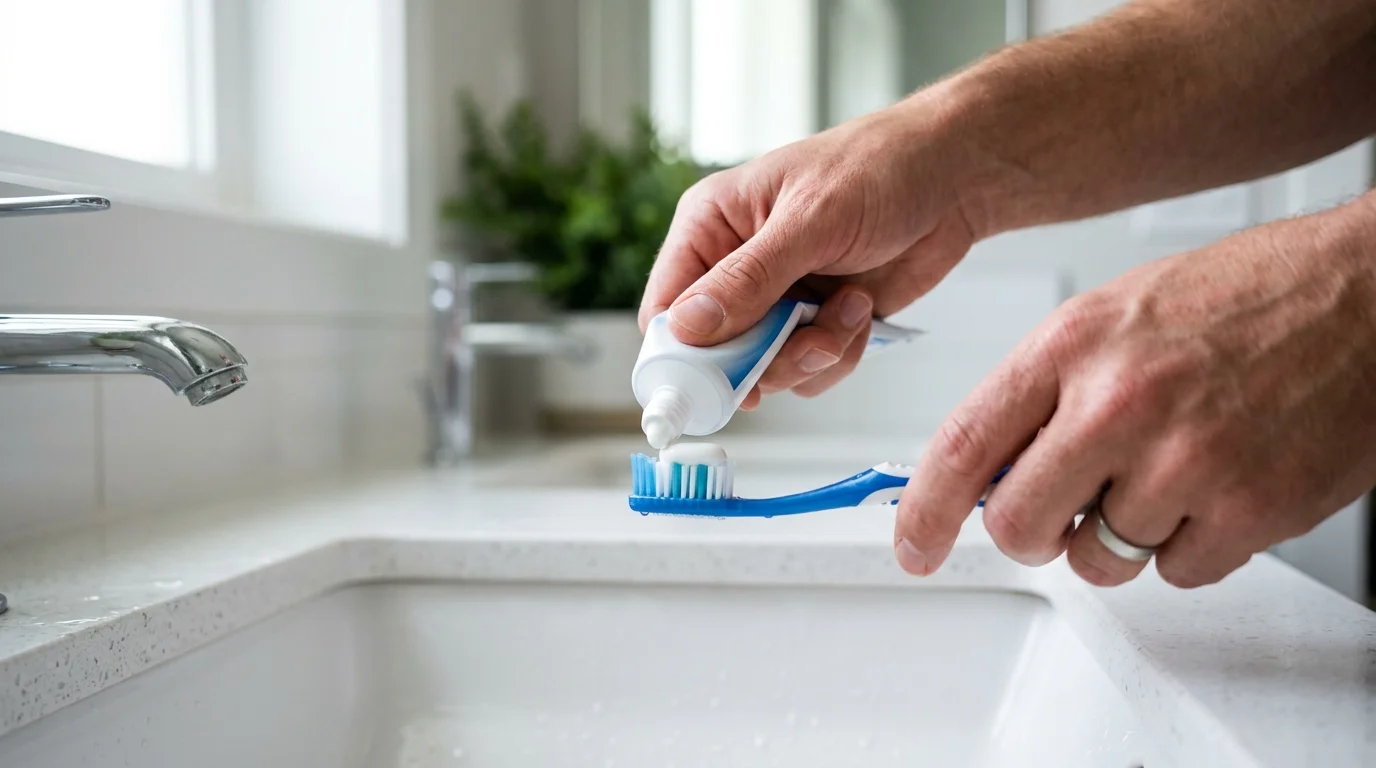
Fluoride works by strengthening tooth enamel at the molecular level replacing part of its natural mineral structure with a version that resists acid better, while also helping rebuild weak spots and making it harder for cavity-causing bacteria to do damage. It’s not a coating sitting on top of your teeth; it’s chemically changing enamel itself.
Here’s the actual chemistry, how you’re exposed to it, and where the current public debate stands.
The Real Chemistry: How Fluoride Strengthens Enamel
Your enamel is made mostly of a mineral called hydroxyapatite strong, but vulnerable to acid. Bacteria in your mouth feed on sugar and produce acid as a byproduct, and that acid dissolves minerals out of your enamel’s surface, weakening it over time. This is the basic mechanism behind every cavity.
When fluoride is present through toothpaste, water, or a professional treatment it does two connected things:
1. It forms a stronger mineral structure. Fluoride ions can replace part of the hydroxyapatite structure, forming fluorapatite a version of the mineral that’s measurably more resistant to acid dissolution than the original.
2. It actively rebuilds weak spots (remineralization). Fluoride replaces minerals lost from acid breakdown, redepositing them into the enamel’s surface essentially patching early, microscopic damage before it becomes a visible cavity.
On top of this structural effect, fluoride may also reduce the amount of acid that cavity-causing bacteria produce, and make it harder for those bacteria to stick to the tooth surface in the first place a secondary, bacterial-level layer of protection on top of the mineral one.
Two Different Kinds of Exposure: Systemic vs. Topical
This distinction gets skipped in most explanations, but it matters:
Systemic fluoride (swallowed, via fluoridated water or supplements) gets incorporated into teeth before they erupt meaning it becomes part of the tooth’s actual structure while it’s still developing under the gums in childhood, making that enamel more acid-resistant from the start.
Topical fluoride (toothpaste, varnish, gels, mouth rinse) works directly on the surface of teeth that have already erupted this is the main way fluoride benefits adults, since your enamel structure is already formed.
This is why fluoride toothpaste still matters well into adulthood, even though the “incorporated into developing teeth” benefit is a childhood-specific mechanism.
The Different Ways Fluoride Is Delivered
- Fluoride toothpaste – the most common method; fluoride sticks to the tooth’s surface when you brush and also increases the amount of fluoride in saliva, helping rebuild the outer enamel layer
- Fluoride mouth rinse – a concentrated solution, available over the counter or prescribed for higher cavity risk
- Fluoride varnish – a high-concentration treatment applied directly onto teeth by a dental professional, keeping fluoride in close contact with teeth for many hours, though it needs to be reapplied periodically
- Fluoride gel or foam – a stronger, in-office dose typically applied for a few minutes at a time for patients at higher risk
- Fluoride supplements – prescribed tablets or lozenges, generally reserved for children at high cavity risk without adequate fluoride exposure elsewhere
- Community water fluoridation – adding fluoride to public water at a controlled, low concentration, historically the most widespread public health delivery method
Where the Current Debate Stands
It’s worth addressing directly, since it’s a live issue: over the past year or two, the HHS Secretary directed an end to the department’s water fluoridation recommendation, and the EPA announced it would review the scientific information on fluoride. Acting on this shift, Florida and Utah enacted statewide bans on community water fluoridation in 2025, and more than 30 bills were introduced across roughly 25 states to restrict or ban it, though many of those bills have since failed in states like Tennessee, Arkansas, South Dakota, and North Dakota. Separately, a 2024 federal court ruling found that fluoride at the currently recommended level poses an unreasonable risk to children’s health, and as of early 2026 the EPA is appealing that ruling on largely procedural grounds rather than disputing the underlying finding.
This debate is specifically about water fluoridation policy and concentration levels it hasn’t changed the underlying, well-established chemistry of how fluoride strengthens enamel described above. Dental and public health organizations, including the ADA, continue to support fluoride use in toothpaste and professional treatments as safe and effective at recommended levels. Given that this is an evolving, actively litigated policy area, it’s worth checking current guidance for your specific state and staying in touch with your dentist about what’s right for your situation.
Is Fluoride Safe? The Dose Matters
The one well-established risk of fluoride exposure is dental fluorosis cosmetic white spots or streaking on developing teeth, caused by excessive fluoride intake during childhood tooth development, before teeth erupt. This is why the CDC recommends specific toothpaste amounts by age (a grain-of-rice-sized smear under age 3, pea-sized from ages 3-6) and why young children should be supervised to spit rather than swallow. At the concentrations used in dental products and historically in water fluoridation, fluoride’s safety and cavity-prevention benefit has decades of research behind it though, as noted above, the specific question of ideal water fluoridation levels is currently under active review and legal challenge.
Understanding this mechanism also helps explain why fluoride fits into the bigger picture of strengthening your teeth overall, alongside diet, daily habits, and professional treatments that all work together to keep enamel resilient.
FAQ
Does fluoride actually repair teeth, or just prevent damage?
Both. It helps redeposit minerals into microscopic weak spots (a real, limited repair process) while also making enamel more acid-resistant going forward but it can’t repair an already-formed cavity, which needs a filling.
Is fluoride toothpaste still necessary if my local water isn’t fluoridated?
Yes fluoride toothpaste works topically on erupted teeth regardless of water fluoridation status, so it remains one of the most direct ways to get fluoride’s protective benefit.
What’s the difference between fluoride varnish and fluoride toothpaste?
Varnish is a much higher, professionally-applied concentration meant to sit on teeth for hours, typically used for patients at higher cavity risk. Toothpaste is a lower daily-use concentration meant for regular home care.
Can adults still benefit from fluoride if their teeth are fully developed?
Yes the remineralization and enamel-hardening effects work on fully erupted adult teeth too, which is the primary mechanism behind toothpaste, varnish, and rinse for adults.
Is the current fluoride debate about toothpaste, or just water?
It’s specifically about community water fluoridation policy and concentration levels the debate hasn’t changed the established science behind fluoride toothpaste or professional dental fluoride treatments.
Curious Whether You’d Benefit From Additional Fluoride Treatment?
Everyone’s cavity risk is different, and your dentist can tell you whether your daily routine is giving you enough fluoride protection or whether a professional treatment would help. Summer Smile Dental in South Gate can assess your risk and build the right preventive plan for you. Schedule an appointment today.