
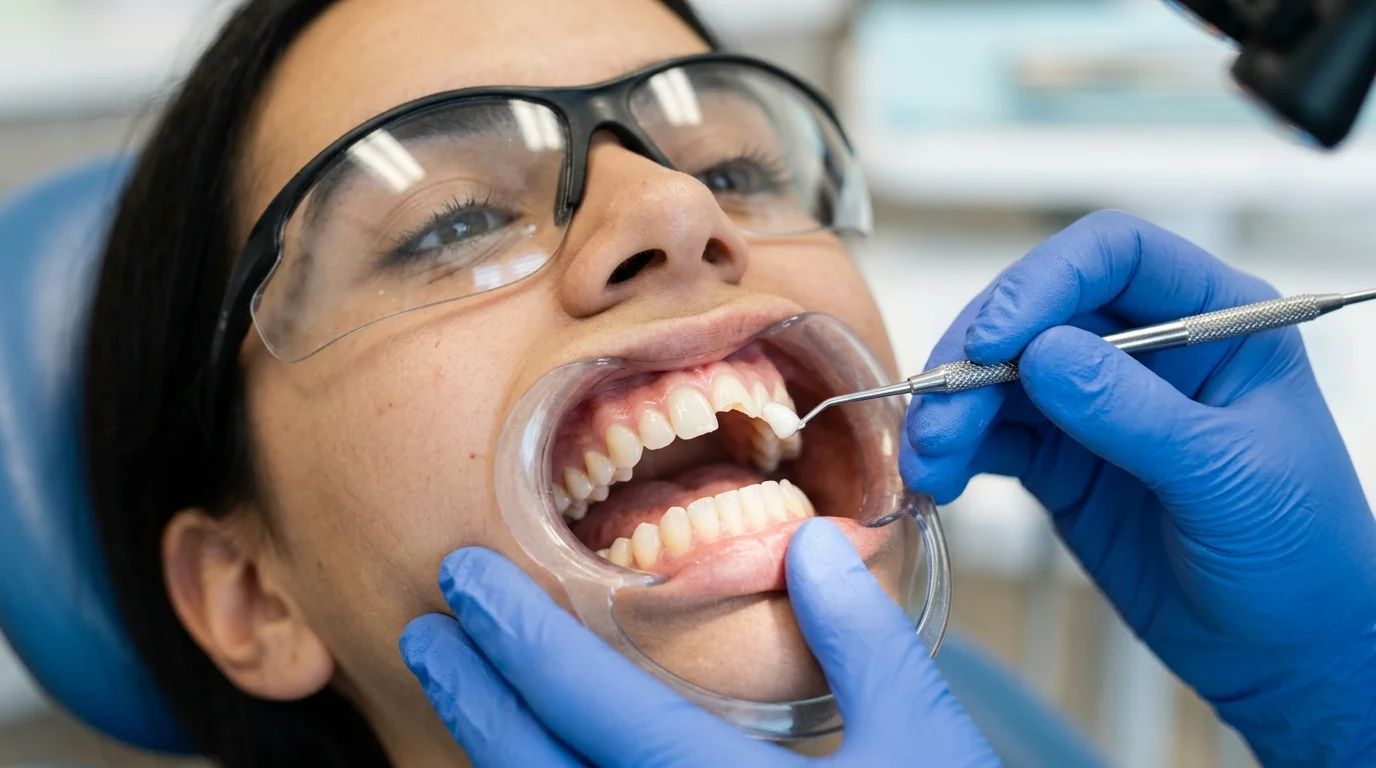
Yes dental bonding is one of the most common and effective ways to fix a chipped tooth, especially for small to moderate chips that don’t involve the tooth’s nerve or root. A dentist applies a tooth-colored resin directly to the damaged area, shapes it to match your natural tooth, and hardens it with a curing light often completed in a single visit with little to no drilling.
The real question isn’t just “can bonding fix a chip” it’s whether bonding is enough for your specific chip, or whether something more is needed.
How Dental Bonding Actually Fixes a Chip
The process is fairly quick and generally comfortable:
- The tooth surface is lightly roughened so the resin has something to grip onto
- A conditioning liquid is applied to help the material bond securely
- Tooth-colored composite resin is applied directly over the chip
- Your dentist shapes the resin to recreate the tooth’s natural contour
- A curing light hardens the material in seconds
- The tooth is polished to blend smoothly with the surrounding enamel
Most single-tooth bonding takes about 30-60 minutes, and anesthesia usually isn’t needed unless the chip is close to a nerve.
Is Your Chip a Good Candidate for Bonding? A Real Framework
| Chip Type | Best Treatment | Why |
|---|---|---|
| Small surface chip, cosmetic only | Bonding | Quick, conservative, blends seamlessly |
| Chipped edge affecting shape/symmetry | Bonding | Resin can rebuild the tooth’s natural contour |
| Chip with mild sensitivity, no visible nerve exposure | Bonding, with monitoring | Still surface-level; watch for worsening sensitivity |
| Larger chip affecting a significant portion of the tooth | Veneer or crown | Bonding lacks the strength/coverage for extensive damage |
| Chip with visible pink (nerve) or sharp pain | Root canal + crown | Nerve involvement needs treatment beyond a cosmetic fix |
| Chip on a tooth with an existing large filling or root canal | Crown | The tooth structure is often too compromised for bonding alone to hold up |
| Chip from an ongoing grinding habit | Bonding + night guard | Without addressing the cause, a new bonding repair will chip again too |
The general rule: if the damage is limited to the visible surface of the tooth and doesn’t affect its structural strength, bonding is usually the right call. If the chip goes deep, exposes sensitive layers, or the tooth is already weakened from prior work, bonding is more of a stopgap than a lasting fix.
Bonding vs. Veneers vs. Crowns for a Chip
Bonding is the most conservative option minimal tooth preparation, one visit, lowest cost, but the least durable and most prone to staining over time.
Veneers cover the entire front surface, offer a longer-lasting and more stain-resistant result, but require more tooth preparation and multiple visits (unless no-prep veneers are an option).
Crowns are used when a chip is severe enough that the tooth’s actual strength is compromised a crown covers the whole tooth rather than just repairing the surface, providing both function and appearance.
Bonding is often the first, least invasive option worth trying you’re not closing the door on veneers or a crown later if bonding isn’t sufficient.
What It Costs and How Long It Lasts
Bonding typically runs $100-$400 per tooth, depending on the extent of the repair and your location making it one of the more affordable cosmetic options compared to veneers or crowns. Because it’s usually considered cosmetic, dental insurance often doesn’t cover it, though it’s worth checking your specific plan.
With good care, bonding typically lasts 3-10 years before it needs touching up or replacing. Lifespan depends heavily on habits biting nails, chewing ice, or grinding your teeth will wear it down faster than normal use would.
When Bonding Isn’t Enough
Bonding isn’t the right fix if:
- The chip exposes the inner (pink) layer of the tooth or causes sharp, lingering pain this needs a root canal evaluation first
- A large portion of the tooth’s structure is missing, since bonding material isn’t strong enough to bear normal biting force over a big repair
- The tooth already has significant prior dental work (large fillings, a root canal) weakening its overall structure
- You grind your teeth heavily without a night guard bonding will simply chip again in the same way the natural tooth did
In these cases, your dentist may recommend a crown or veneer instead, which provide more structural support or broader coverage.
Caring for a Bonded Chip Repair
- Avoid biting nails, ice, or using your teeth to open things these are the most common causes of bonding failure
- Brush and floss normally; bonded teeth don’t need special hygiene products
- Use non-abrasive toothpaste to avoid dulling the surface over time
- Wear a night guard if you grind your teeth, to protect both the repair and your natural teeth
- Keep up with regular checkups so minor wear can be polished before it becomes a bigger repair
Once your bonding is placed, it’s normal for the tooth to feel a little different at first it’s worth knowing what to expect in the days and weeks after your bonding appointment so you can tell normal adjustment apart from something worth a follow-up call.
FAQ
How long does bonding for a chipped tooth take?
Usually 30-60 minutes per tooth, often completed the same day you visit.
Does bonding hurt?
Typically no anesthesia usually isn’t needed since the procedure doesn’t normally involve the tooth’s nerve.
Can bonding be whitened later if my teeth get brighter?
No the resin doesn’t respond to whitening treatments the way natural enamel does. If you’re planning to whiten, do it before bonding so the shade matches.
Will insurance cover bonding for a chipped tooth?
It depends on the cause. Bonding for cosmetic reasons often isn’t covered, but if the chip resulted from an injury or is affecting function, some plans may cover part of the cost worth checking with your provider.
What if my bonding chips again after it’s repaired?
It can usually be repaired or touched up without starting over completely, unless the damage is more extensive but repeated chipping is often a sign of a habit (grinding, nail-biting) that’s worth addressing directly.
Have a Chipped Tooth?
The best way to know if bonding is right for your specific chip is a quick exam what looks minor can sometimes go deeper than it appears. Summer Smile Dental in South Gate can take a look and recommend the right fix for your tooth and your budget. Schedule an appointment today.