
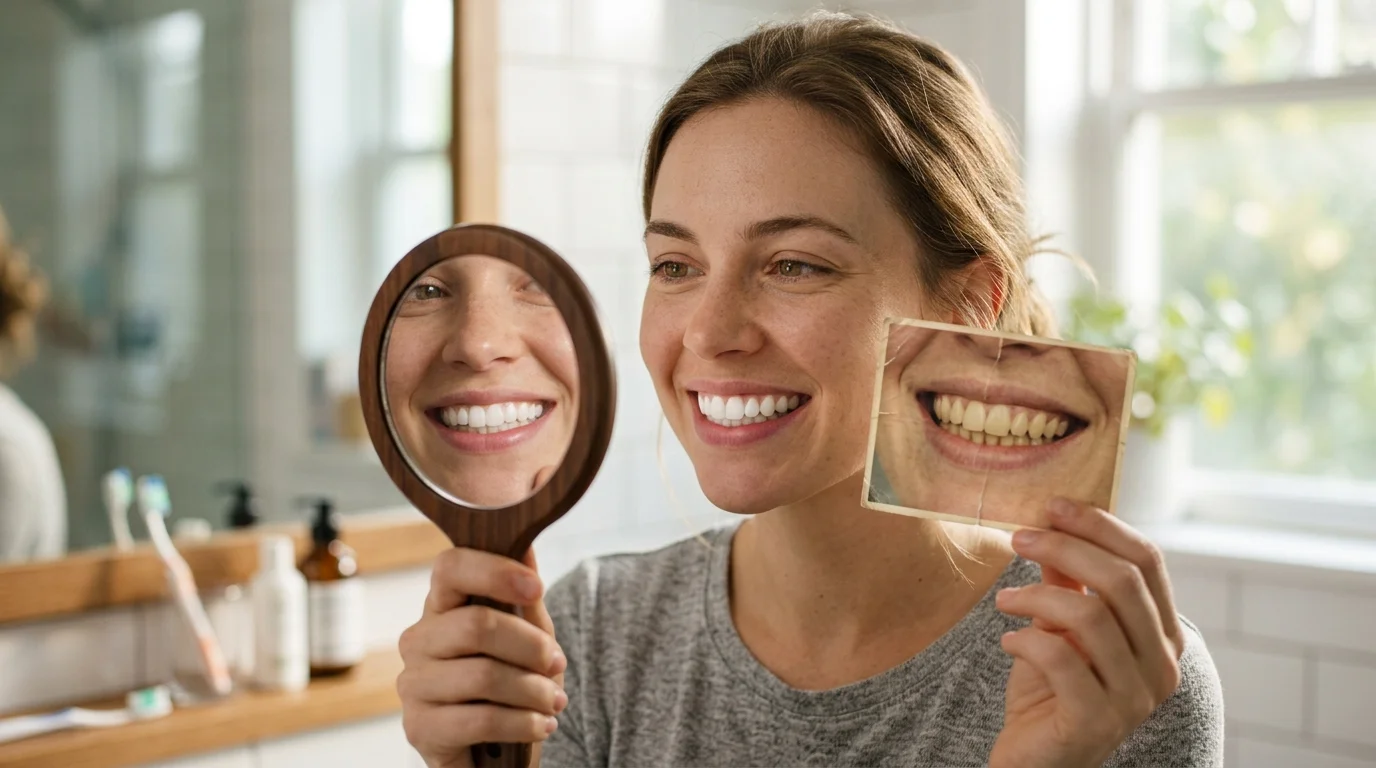
It depends on what’s causing the yellowing. Surface-level (extrinsic) yellowing from coffee, tea, wine, or smoking genuinely reverses with the right whitening approach, since it’s just staining sitting on top of your enamel. Yellowing that comes from inside the tooth (intrinsic) from aging, genetics, or certain medications can’t be truly “reversed” in the literal sense, but it can be effectively treated and covered.
Here’s how to know which one applies to you, and what actually works for each.
The Two Types of Yellowing, and Why It Matters
Extrinsic (surface) yellowing sits on top of your enamel caused by staining foods and drinks, smoking, or plaque buildup from inconsistent hygiene. This type is genuinely reversible because you’re removing a stain, not changing the tooth’s actual color.
Intrinsic (internal) yellowing originates inside the tooth, in the dentin layer beneath your enamel. As you age, enamel naturally thins, exposing more of the yellowish dentin underneath this is one of the most common causes and isn’t something you did wrong. Other causes include genetics (some people simply have naturally more yellow-toned dentin), certain childhood medications, dental trauma, and excessive fluoride exposure during tooth development.
Why this distinction matters: whitening treatments work by bleaching pigmented molecules, and they’re most effective on extrinsic stains. Intrinsic discoloration can improve with whitening, but often only partially the honest expectation is a treated, improved result rather than a full reversal back to some earlier “original” shade.
If It’s Extrinsic (Surface) Staining: This Genuinely Reverses
Whitening toothpaste. Contains mild abrasives that physically lift surface stains. Real, if modest, results with consistent use.
Professional or at-home peroxide-based whitening. Hydrogen or carbamide peroxide breaks down surface stain molecules. This is the most effective, well-evidenced approach for extrinsic staining, whether done in-office or with dentist-provided take-home trays.
Consistent, correct brushing. Twice daily, two minutes each time, reaching all surfaces genuinely prevents new surface staining from accumulating.
Reducing staining foods and drinks, or rinsing with water after consuming them, prevents new pigment from settling into your enamel in the first place.
If It’s Intrinsic (Internal) Discoloration: Managed, Not Reversed
Whitening can still help, to a point. Some whitening products can lift deeper stains to a degree, but results are typically more modest than with surface staining, and it won’t restore the tooth to a “younger” shade it lightens what’s there.
Dental bonding covers discoloration with tooth-colored resin, effective for a tooth or two that don’t respond well to whitening. Needs touch-ups every 5-7 years.
Porcelain veneers cover widespread discoloration that doesn’t respond to whitening, offering a longer-lasting, more stain-resistant result but this isn’t reversible once your enamel has been prepared for them.
Crowns are used if discoloration is paired with a structurally weakened or decayed tooth, addressing both function and appearance together.
Important: none of these treatments are “reversing” the tooth back to some untouched original state they’re covering or lightening the discoloration through a real treatment. That’s a meaningful distinction if you’re picturing a natural, no-intervention fix.
If your yellowing is mostly surface-level, understanding exactly how whitening strips work at a chemical level can help you set realistic expectations before you start.
Home Remedies: What’s Actually Worth Trying (and What Isn’t)
A lot of viral home remedies for yellow teeth carry real risk without much benefit:
- Activated charcoal – can be abrasive enough to wear down enamel with regular use, which paradoxically exposes more yellow dentin underneath the opposite of the goal
- Lemon, orange peels, or apple cider vinegar – acidic enough to erode enamel with repeated use; weak evidence for actual whitening benefit
- Baking soda paste – has some real evidence behind it as a mild, safe abrasive for surface stains, used in moderation
- Oil pulling – no solid evidence for a direct whitening effect, though it may support general oral hygiene
The general rule: if a remedy is acidic or abrasive enough to feel aggressive, it’s more likely to damage your enamel over time than meaningfully whiten your teeth and thinner enamel exposes more yellow dentin, making things worse in the long run.
Why “Reversed” Isn’t Always the Right Goalpost
Since your natural tooth color is partly genetic and partly a result of unavoidable aging, some degree of yellowing over your lifetime is simply normal and not a sign anything’s gone wrong. The more useful question often isn’t “how do I reverse this completely” but “how do I get back to my healthiest, brightest natural shade, and keep it there” which is a more achievable and honest target than expecting a permanent, one-time fix.
When to See a Dentist Rather Than Try This on Your Own
- Discoloration limited to just one tooth (often decay or nerve damage, not general yellowing)
- Yellowing paired with pain, bad breath, or bleeding gums
- Gray or purple discoloration, which can indicate a different underlying cause than typical yellowing
- You’ve tried consistent home care without noticeable improvement after a few weeks
A dentist can also tell you upfront whether your discoloration is extrinsic or intrinsic which determines whether at-home whitening is likely to work well for you, or whether you’re better served by a professional treatment from the start.
FAQ
Can yellow teeth from coffee and tea be fully reversed?
Yes this is extrinsic staining, and it responds well to consistent brushing, whitening toothpaste, and professional or at-home peroxide-based whitening.
Can yellowing from aging be reversed?
Not fully in the literal sense, since it’s related to enamel thinning and dentin showing through but whitening, bonding, or veneers can meaningfully lighten and improve the appearance.
Why didn’t over-the-counter whitening strips work for me?
If your discoloration is more intrinsic (genetic, medication-related, or age-related), surface whitening products may only offer partial improvement a professional evaluation can clarify what’s actually achievable for your specific case.
Is one tooth turning yellow while the others stay the same a normal aging pattern?
No single-tooth discoloration usually points to something specific to that tooth, like decay, an old filling, or nerve damage, and is worth having checked.
Are charcoal toothpastes actually effective for yellow teeth?
Evidence is limited, and the abrasiveness can wear down enamel with regular use which can expose more yellow dentin and make discoloration worse over time.
Curious What’s Actually Causing Your Yellowing?
Knowing whether your discoloration is surface-level or coming from within the tooth changes what will actually work for you. Summer Smile Dental in South Gate can take a look and recommend the right approach for your smile. Schedule a consultation today.