
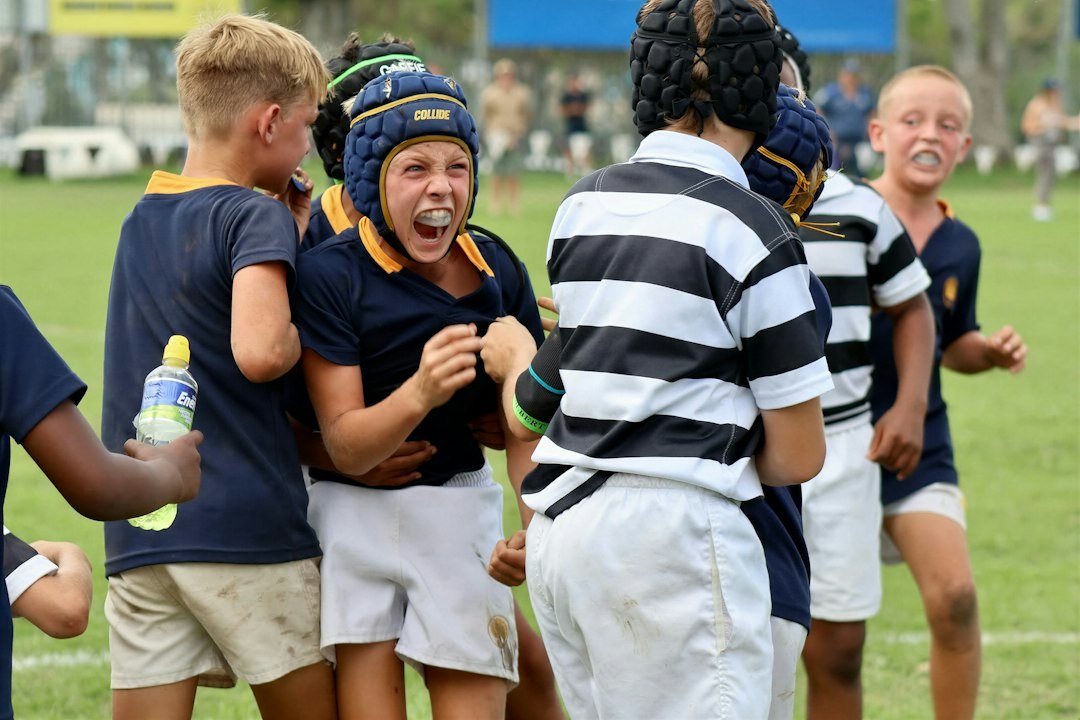
If your child plays a contact or collision sport, yes. A mouthguard is one of the simplest ways to protect against chipped teeth, knocked-out teeth, cut lips, and jaw injuries, and it costs far less than treating those injuries afterward.
Even in sports that don’t seem rough, accidents happen, so it’s worth knowing where a mouthguard makes sense.
Which Sports Call for a Mouthguard
- Football, rugby, and hockey
- Basketball and soccer
- Martial arts, boxing, and wrestling
- Baseball and softball
- Skateboarding, BMX, and skating
- Gymnastics, cheerleading, and volleyball
A good rule of thumb is that if there’s a chance of a fall, a collision, or a flying ball or elbow near the face, a mouthguard is a good idea.
Types of Mouthguards
Stock mouthguards. These come ready-made from a sporting goods store. They’re the cheapest option but they fit loosely, can be bulky, and often make it harder to breathe or talk.
Boil-and-bite mouthguards. You soften them in hot water and bite down to shape them. They fit better than stock ones, but the fit is still approximate.
Custom-fitted mouthguards. Made from an impression of your child’s teeth, these fit snugly, feel more comfortable, and are generally the most protective. Kids are more likely to actually keep them in.
Why Custom Fit Matters
A mouthguard only works if it stays in place and your child will wear it. A loose one slips, gets chewed on, or gets taken out. A custom guard is thinner, stays put, and doesn’t interfere with breathing, which makes it more likely to be worn consistently. You can read more about this on our sports guards page.
Who Needs One Most
Kids with braces benefit the most. A blow to the mouth can cut the lips and cheeks against brackets, and a mouthguard made for braces protects both teeth and hardware.
Children who’ve already had a dental injury are at higher risk of another one.
Teens in high-contact leagues should treat a mouthguard as required gear, not an optional extra.
Caring for a Mouthguard
- Rinse it with cool water or brush it with a toothbrush after each use
- Store it in a ventilated, firm case, not loose in a gym bag
- Keep it away from heat, which can warp it
- Don’t let your child chew on it
- Bring it to dental checkups so it can be checked
- Replace it if it’s worn, torn, or no longer fits
Growing kids often need a new one every season or two, since their mouths change quickly. If an injury does happen, knowing what to do if a tooth is knocked out can make a real difference.
FAQ
Does a mouthguard really prevent injuries?
It can’t guarantee nothing will happen, but it cushions blows and spreads out force, which lowers the risk and severity of dental injuries.
Does a mouthguard need to be worn for practice too?
Yes. Many injuries happen in practice, not just games.
Can kids wear mouthguards with baby teeth?
Yes, and they should if they play contact sports. They may need replacing more often as teeth come and go.
Is a mouthguard needed for non-contact sports?
Not always, but it’s worth considering for any activity with a risk of falls or collisions.
How often should a mouthguard be replaced?
When it’s worn or damaged, or when your child’s mouth has changed enough that it no longer fits well.
Get Your Young Athlete Covered
A custom guard is a small investment compared with repairing a damaged smile. Summer Smile Dental in South Gate can fit your child for a mouthguard that works. Book an appointment today.