
In-office (chairside) whitening typically lasts 1 to 3 years, while dentist-supervised take-home gel trays typically last a year or longer. Both outlast over-the-counter products by a wide margin, since they use stronger, professionally controlled peroxide concentrations. Where you land in that range depends heavily on your habits afterward, not just which method you choose.
The Two Professional Methods, Compared
In-office (chairside) whitening is completed in a single visit at your dentist’s office, using a strong bleaching agent typically highly concentrated hydrogen or carbamide peroxide sometimes paired with heat or light to accelerate the process. This delivers the fastest, most dramatic results, and with good oral hygiene afterward, typically lasts 1 to 3 years.
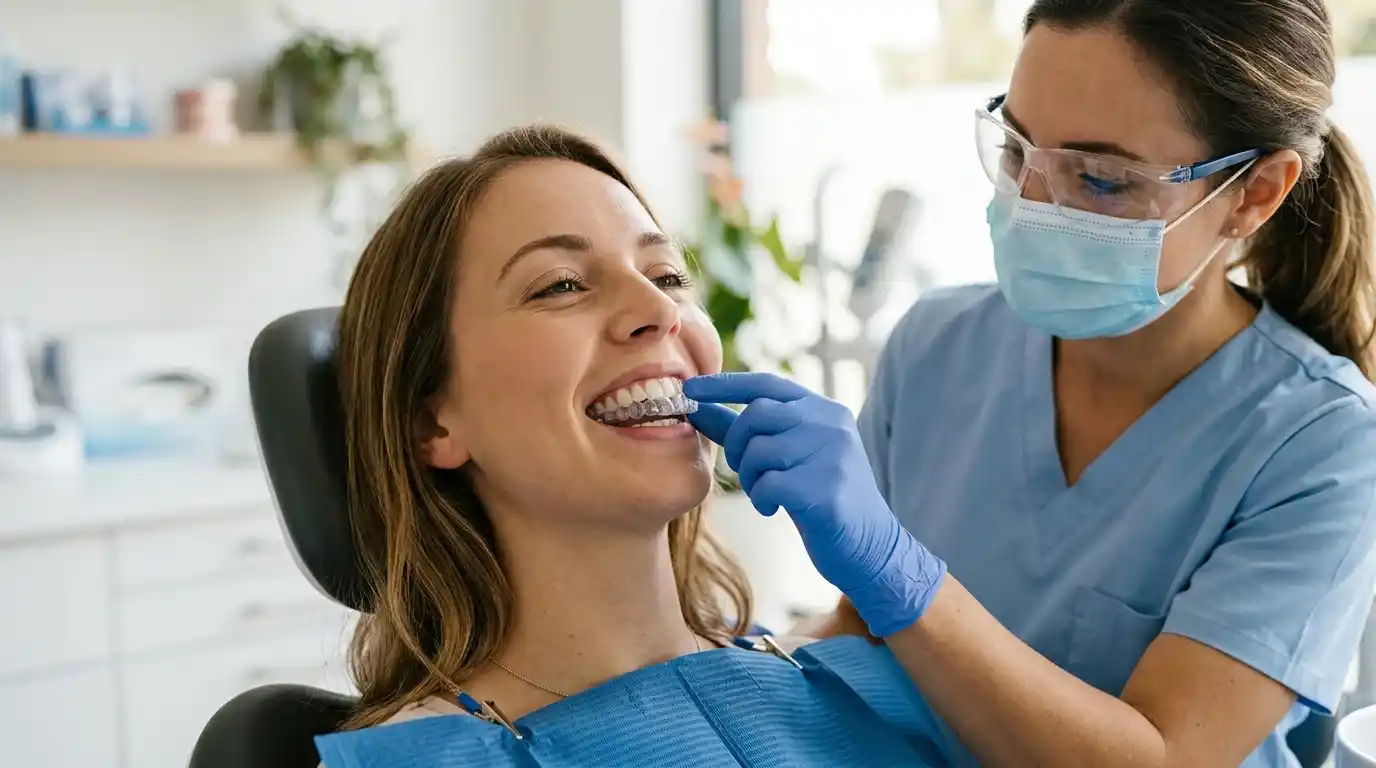
Dentist-supervised take-home trays use custom-fitted trays made specifically for your teeth, filled with a professional-strength gel that’s stronger than anything available over the counter. You’ll typically wear these for a period your dentist specifies sometimes several hours or overnight, for a week or more. Results build more gradually than chairside whitening, but with proper hygiene, this method often provides results lasting a year or longer.
Why the Range Is So Wide
| Factor | Effect on Duration |
|---|---|
| Coffee, tea, red wine, or smoking | Shortens the timeline meaningfully |
| Good daily brushing and flossing | Extends results toward the higher end |
| Touch-up treatments (using leftover trays periodically) | Can extend results well beyond the initial timeline |
| Type of staining (extrinsic vs. intrinsic) | Extrinsic (surface) staining responds better and stays lighter longer than deeper intrinsic staining |
| How closely you followed your dentist’s usage instructions | Under- or overuse of take-home trays affects both initial results and how long they last |
Why Professional Whitening Outlasts Over-the-Counter Options
The core reason is concentration and control. Over-the-counter products (strips, pens, whitening toothpaste) use lower peroxide concentrations for safety in an unsupervised setting, which is why their results even the better OTC options tend to last weeks to a few months rather than years. Professional treatments use significantly stronger formulations under your dentist’s supervision, which is both why they whiten more effectively and why the results hold up longer.
How to Get the Most Out of the Higher End of the Range
- Use a straw for staining beverages when you can
- Rinse with water after coffee, tea, or wine rather than letting it sit on your teeth
- Keep up with twice-daily brushing and daily flossing
- Get regular professional cleanings, which clear surface staining before it accumulates
- Ask your dentist about touch-up treatments many people extend take-home tray results by using them periodically (sometimes just once every few months) rather than treating the initial treatment as a one-time event
- Avoid smoking or tobacco use, which significantly accelerates new staining regardless of method
Which Method Should You Choose?
Chairside/in-office whitening makes sense if you want the fastest, most dramatic result for an event, or simply because you don’t want to manage a multi-day at-home routine.
Take-home trays make sense if you prefer a more gradual approach, want the flexibility of touch-ups using the same custom trays down the line, or your dentist recommends it based on your sensitivity level or the type of staining you have.
Some people do both an initial in-office treatment for a fast result, followed by occasional take-home touch-ups to maintain it. Your dentist can advise on what fits your specific teeth and goals.
What Determines Whether You’re Even a Good Candidate
- Cavities or gum disease should be treated first, since whitening on compromised teeth or inflamed gums increases irritation risk
- Existing crowns, veneers, or fillings won’t lighten, so your dentist should flag if this creates a visible mismatch before you commit
- Some sensitivity during or after treatment is common and usually temporary your dentist can adjust the approach if you’re prone to sensitive teeth
Whichever professional method you choose, it helps to understand the bigger picture of why whitening fades over time in the first place, so you know what to expect once your results start to shift.
FAQ
Is in-office whitening always better than take-home trays?
Not necessarily “better” in-office is faster with more dramatic initial results, while take-home trays offer flexibility and, for many people, comparably long-lasting results with a more gradual approach.
Can I extend my results without redoing the full treatment?
Yes many people use leftover custom trays periodically for touch-ups, which can meaningfully extend results beyond the initial timeline. Ask your dentist about a maintenance schedule.
Why did my in-office whitening fade faster than expected?
This usually comes down to diet and habits afterward heavy coffee, tea, red wine, or smoking accelerates new staining regardless of how strong the initial treatment was.
Do professional results actually last years, or is that optimistic?
With good oral hygiene and moderate staining habits, 1-3 years for chairside and a year or more for take-home trays is a realistic, commonly cited range though individual results vary.
Is it safe to get professional whitening more than once?
Generally yes, periodically, though your dentist should confirm timing based on your enamel health and treatment history rather than doing it too frequently.
Curious How Long Whitening Would Actually Last for You?
The right method and how long it lasts depends on your specific teeth, staining type, and habits. Summer Smile Dental in South Gate can recommend the best professional option for your smile and help you get the most out of it. Schedule a consultation today.