
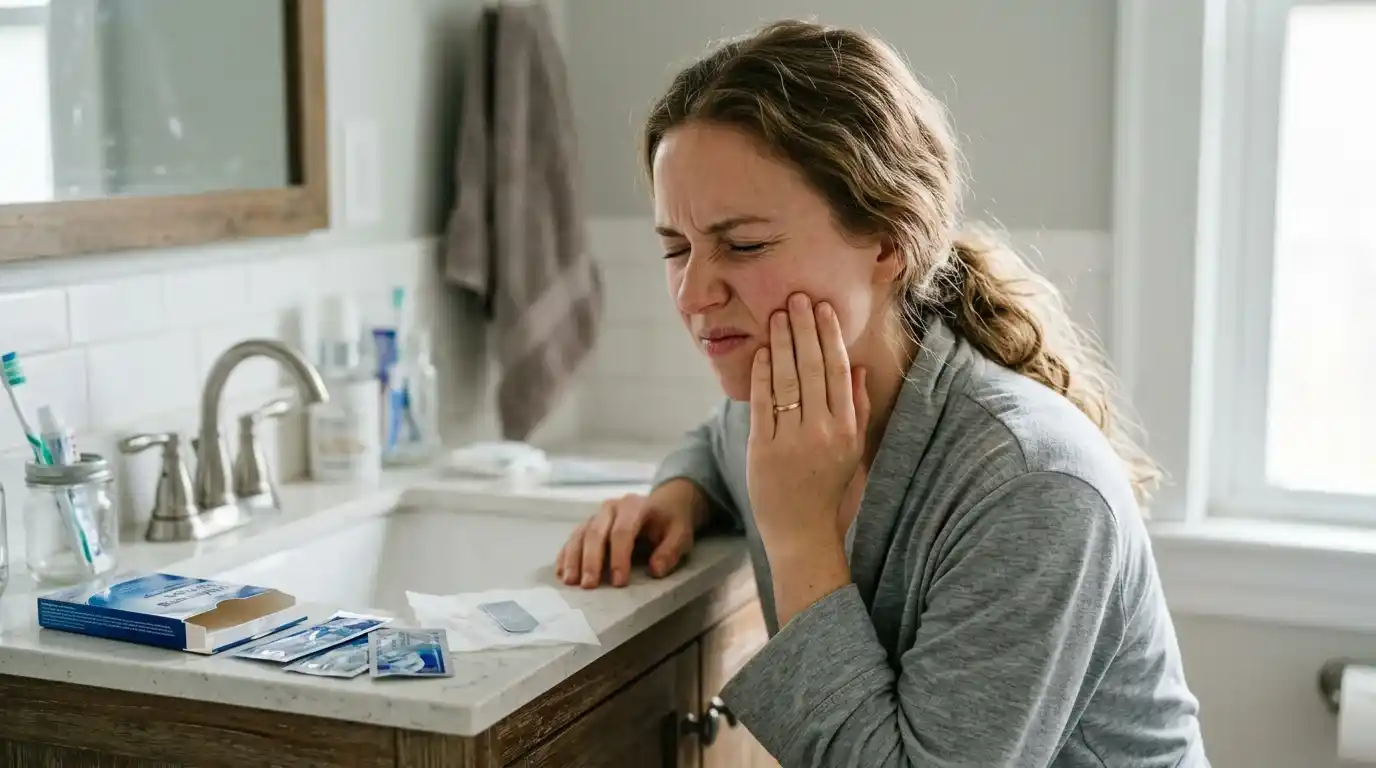
Mild to moderate sensitivity is a normal, expected side effect of teeth whitening but pain severe enough to call “unbearable” isn’t typical, and usually means something beyond ordinary sensitivity is going on. This could be an underlying dental issue that whitening exposed, gum tissue irritation from the whitening agent itself, or, in rarer cases, a reaction that needs prompt attention rather than home care.
Here’s how to tell what’s happening, and what to actually do about it.
Normal Sensitivity vs. Unbearable Pain: The Real Difference
Normal post-whitening sensitivity typically feels like a brief, sharp zing to cold air, water, or food uncomfortable but short-lived, usually fading within a day or two after treatment, sometimes lingering mildly for up to a week.
Unbearable pain is different in kind, not just degree constant rather than triggered only by cold, throbbing rather than a quick zing, disrupting sleep or concentration, or accompanied by swelling, gum irritation, or visible tissue damage. This level of pain is your body telling you something specific is wrong, not just that your teeth are adjusting.
Why Pain This Severe Can Happen
An undetected cavity or crack. Whitening gel penetrating into a cavity or crack reaches the tooth’s inner nerve tissue directly, rather than just the outer dentin layer this can cause dramatically more intense pain than typical sensitivity, since it’s essentially exposing the nerve to the whitening chemical.
Existing gum recession or exposed roots. Tooth roots aren’t protected by enamel the way the crown of your tooth is, so whitening gel reaching an exposed root can cause pain far beyond typical sensitivity.
Chemical burn to gum tissue. If whitening gel spreads onto your gums from an ill-fitting tray, an overloaded strip, or leaving gel on too long it can cause a genuine chemical burn: white, irritated tissue, swelling, and significant pain, not just mild irritation.
Overuse or overly high concentration. Using whitening products more frequently or at a higher strength than directed, especially without professional guidance, meaningfully increases the risk of this level of pain.
Undiagnosed dental work needing attention. A loose filling, a crown with a gap at the edge, or an old root canal that wasn’t fully sealed can all allow whitening gel to reach sensitive or already-compromised tissue.
What to Do Right Now
1. Stop whitening immediately. Don’t try to push through and finish the treatment continuing exposes the affected area to more of the irritant.
2. Rinse thoroughly with water. If gel contacted your gums, this helps remove residual product from the tissue.
3. Take an appropriate over-the-counter pain reliever, as directed. This won’t resolve the underlying cause but can help manage discomfort while you arrange care.
4. Avoid hot, cold, and acidic foods and drinks until the pain has settled, since these will trigger more discomfort on already-irritated teeth or tissue.
5. Don’t brush aggressively. Gentle brushing with a soft-bristled brush; avoid scrubbing at the affected area.
6. Call your dentist this level of pain warrants an actual evaluation, not just home remedies. If it’s from a store-bought product and you don’t have a regular dentist, this is a reasonable time to find one rather than waiting it out.
When to Seek Same-Day or Urgent Dental Care
- Pain that isn’t improving or is getting worse after 24-48 hours
- Visible white patches, blistering, or significant swelling of the gum tissue
- Pain severe enough to disrupt sleep or normal function
- Throbbing pain, which is different from the sharp, brief sensitivity typical of whitening
- Any signs of infection fever, spreading swelling, or a bad taste
These aren’t signs to wait out a same-day or urgent dental visit is appropriate.
How This Gets Properly Treated
Your dentist will identify the actual source whether that’s a cavity, a crack, gum tissue damage, or something else and treat that directly rather than just managing the pain. This might mean:
- A filling or crack repair if decay or damage is the underlying cause
- Fluoride varnish or a desensitizing treatment to calm an overreactive nerve
- Time and topical care for gum tissue to heal, if it was chemical irritation
- Addressing an ill-fitting crown, filling, or old dental work that allowed gel to reach sensitive tissue
Once the actual cause is treated, pain at this level should resolve it isn’t something you should expect to just “wait out” indefinitely.
Understanding the actual chemistry behind whitening strips can also help explain why this level of pain isn’t typical – and why it’s worth having a dentist check for an underlying cause rather than assuming it’s just part of the process.
How to Prevent This Next Time
- Get a dental exam before starting any whitening treatment, especially if it’s been a while since your last checkup this catches cavities, cracks, or gum issues before they become a painful surprise
- Use only products appropriate for your sensitivity level, and follow directions exactly don’t double up on time or frequency hoping for faster results
- Choose custom-fitted trays over generic ones if you’re prone to gum sensitivity, since a poor fit is one of the most common causes of gel reaching the gums
- Stop immediately at the first sign of unusual pain, rather than pushing through hoping it improves on its own
FAQ
Is it normal for teeth whitening pain to be this severe?
No mild to moderate sensitivity is normal and expected, but pain severe enough to disrupt your day or sleep usually points to an underlying issue that needs a dentist’s evaluation.
How long should normal whitening sensitivity last?
Typically a day or two, sometimes lingering mildly up to a week. Pain that isn’t improving within that window, or that’s getting worse, isn’t following the typical pattern.
Can teeth whitening damage a tooth permanently?
When done correctly on healthy teeth, no. But whitening a tooth with an undiagnosed cavity, crack, or exposed root can cause real, significant discomfort and sometimes needs treatment to resolve.
Should I keep using desensitizing toothpaste if the pain is severe?
It’s reasonable while you arrange to be seen, but severe pain needs an actual diagnosis desensitizing toothpaste treats symptoms, not the underlying cause.
Is gum burning from whitening gel serious?
It can look alarming, but with prompt care it typically heals. Still worth having your dentist confirm there’s no lasting tissue damage and address the cause (usually a fit or usage issue).
Dealing With Severe Pain After Whitening?
This level of discomfort deserves a real evaluation, not just guesswork with home remedies. Summer Smile Dental in South Gate can find out exactly what’s causing your pain and get you real relief. Schedule an appointment today.