
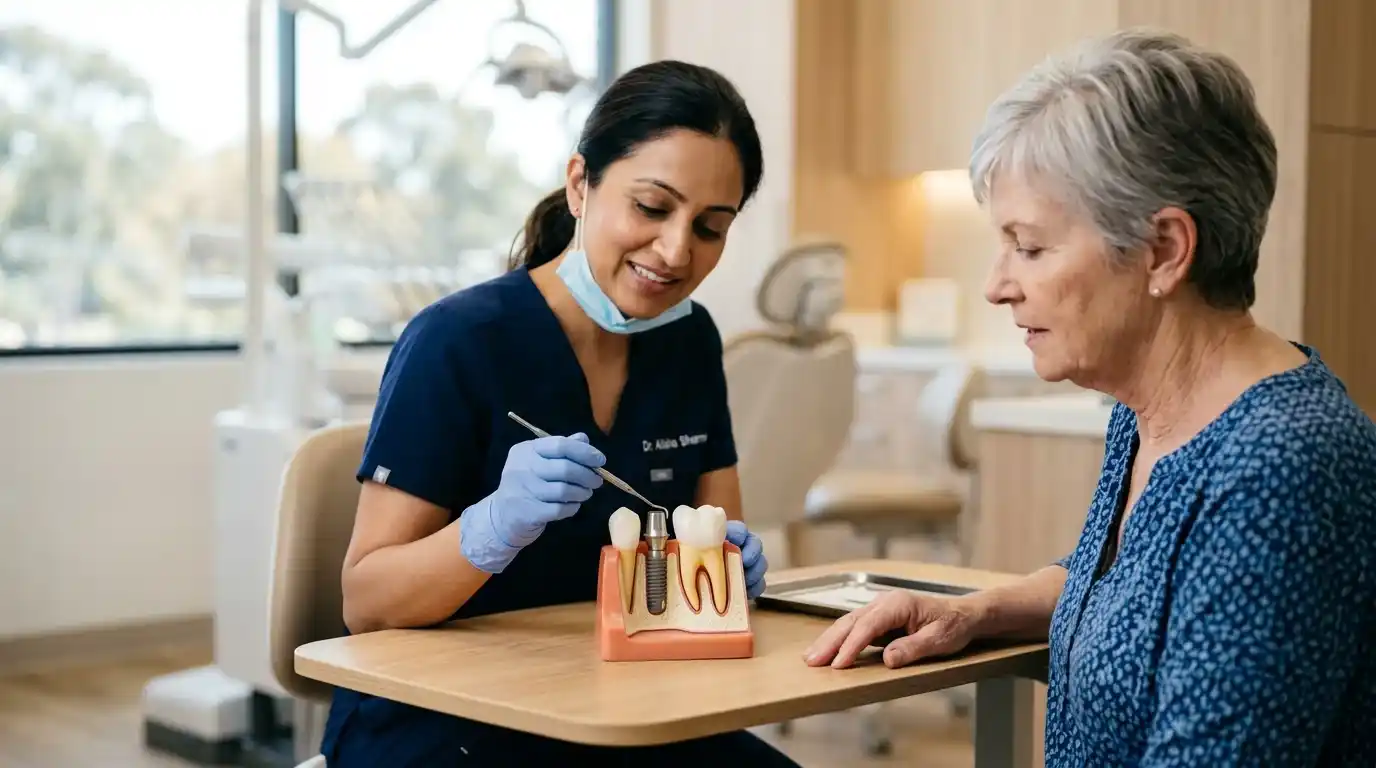
“Best” depends on what you’re actually asking the brand of implant used, the type of implant design, or the kind of restoration built on top of it. These are three different questions, and the honest answer is that for most patients, brand matters far less than people assume the type of implant and restoration that fits your specific situation, combined with your dentist’s skill, matters much more.
Here’s the real answer to each version of the question.
“Best Brand”: Why This Matters Less Than You’d Think
Major implant manufacturers (Straumann, Nobel Biocare, Zimmer Biomet, and similar) all produce implants with strong, well-documented long-term success rates, typically in the 95-98% range when placed correctly. The differences between reputable brands come down to surface technology and design details that affect healing speed and specific clinical situations not dramatic differences in whether your implant will succeed.
What actually matters more than brand:
- Whether the implant meets recognized safety and quality standards (FDA clearance, ISO certification)
- Your dentist’s experience and comfort working with the system they use
- Your bone quality and how well the case was planned
- How well you follow post-placement care instructions
Your dentist will generally use the system they’re trained and experienced with this is a reasonable thing to ask about at your consultation, but it shouldn’t be the deciding factor in choosing where you get treated.
“Best Type”: Endosteal vs. Subperiosteal
This is about the actual implant design and how it’s placed:
Endosteal implants are the standard, most common type a screw-shaped post placed directly into the jawbone. This is what most people mean by “dental implant” and is the right choice for the vast majority of patients with adequate jawbone density.
Subperiosteal implants sit on top of the jawbone, under the gum, rather than being placed inside it. These are used far less often today, generally reserved for patients with significant bone loss who aren’t candidates for bone grafting or don’t want to undergo it.
For most people, endosteal implants are simply the standard, well-established option the “best type” question mostly comes up for patients with limited jawbone density, where your oral surgeon will discuss whether bone grafting to allow an endosteal implant, or a subperiosteal implant, is the better path.
“Best Restoration”: Depends Entirely on How Many Teeth Are Missing
This is where the real decision-making happens for most patients:
Single implant crown for one missing tooth. An implant post supports a single custom crown. This is the standard, most predictable option when only one tooth needs replacing.
Implant bridge for multiple missing teeth in a row. Two implant-supported crowns anchor a bridge spanning the gap between them, using fewer implants than replacing every single tooth individually.
Implant-retained denture for a full arch of missing teeth. As few as four implants can support and stabilize a full denture, offering significantly better stability and chewing function than a traditional removable denture, at a lower cost than replacing every tooth with its own implant.
All-on-4 / All-on-6 a specific full-arch approach using 4-6 strategically placed implants to support a fixed (non-removable) full arch of teeth, often completed with a temporary set the same day as surgery.
Which Restoration Type Fits Your Situation?
| Your Situation | Likely Best Fit |
|---|---|
| One missing tooth | Single implant crown |
| A few missing teeth in a row | Implant bridge |
| Missing most or all teeth in an arch, want it removable | Implant-retained denture |
| Missing most or all teeth in an arch, want it fixed/non-removable | All-on-4 or All-on-6 |
| Limited jawbone density | Bone grafting + endosteal, or subperiosteal implant |
What Actually Determines a Successful Outcome
- Your dentist or oral surgeon’s experience this affects outcomes more than almost any other single factor
- Proper planning with imaging (3D scans, CT imaging) to assess bone quality and plan precise placement
- Your bone density and overall oral health going into the procedure
- How well you follow aftercare instructions, particularly avoiding smoking, which significantly impacts implant success rates
- Ongoing maintenance brushing, flossing, and regular checkups are just as important for implants as for natural teeth
Questions Worth Asking at Your Consultation
- Which implant system do you use, and why?
- How many years of experience do you have placing implants?
- What’s my bone density like, and will I need grafting?
- Which restoration type do you recommend for my specific situation, and why?
- What’s the expected timeline from placement to final restoration?
If a missing tooth is what brought you here, it’s also worth understanding how implants compare to other replacement paths, and why a cosmetic fix like veneers can’t substitute for actually replacing the tooth first.
FAQ
Does the implant brand really not matter?
For most patients, reputable brands all perform well the bigger factors are your dentist’s experience, your bone quality, and proper aftercare. It’s still reasonable to ask your dentist which system they use and why.
Are endosteal implants always better than subperiosteal?
Endosteal is the standard choice for most patients with adequate bone. Subperiosteal implants exist specifically for situations where bone grafting isn’t a good option neither is universally “better,” they suit different situations.
Is All-on-4 the same as an implant-retained denture?
They’re related but distinct All-on-4 refers to a specific fixed, non-removable full-arch approach, while implant-retained dentures are typically removable, though both use a small number of strategically placed implants.
How do I know which restoration type is right for me?
It depends on how many teeth are missing, your bone density, budget, and whether you want a fixed or removable result a consultation with imaging is the only way to determine this accurately.
Is a more expensive implant automatically a better one?
Not necessarily cost varies by brand, complexity of your case, and your provider’s expertise, but a higher price doesn’t automatically mean a better clinical outcome for your specific situation.
Trying to Figure Out the Right Implant Option for You?
The right answer depends entirely on your specific mouth, bone density, and goals not a generic “best” implant that applies to everyone. Summer Smile Dental in South Gate can evaluate your situation and walk you through exactly what fits. Schedule a consultation today.