
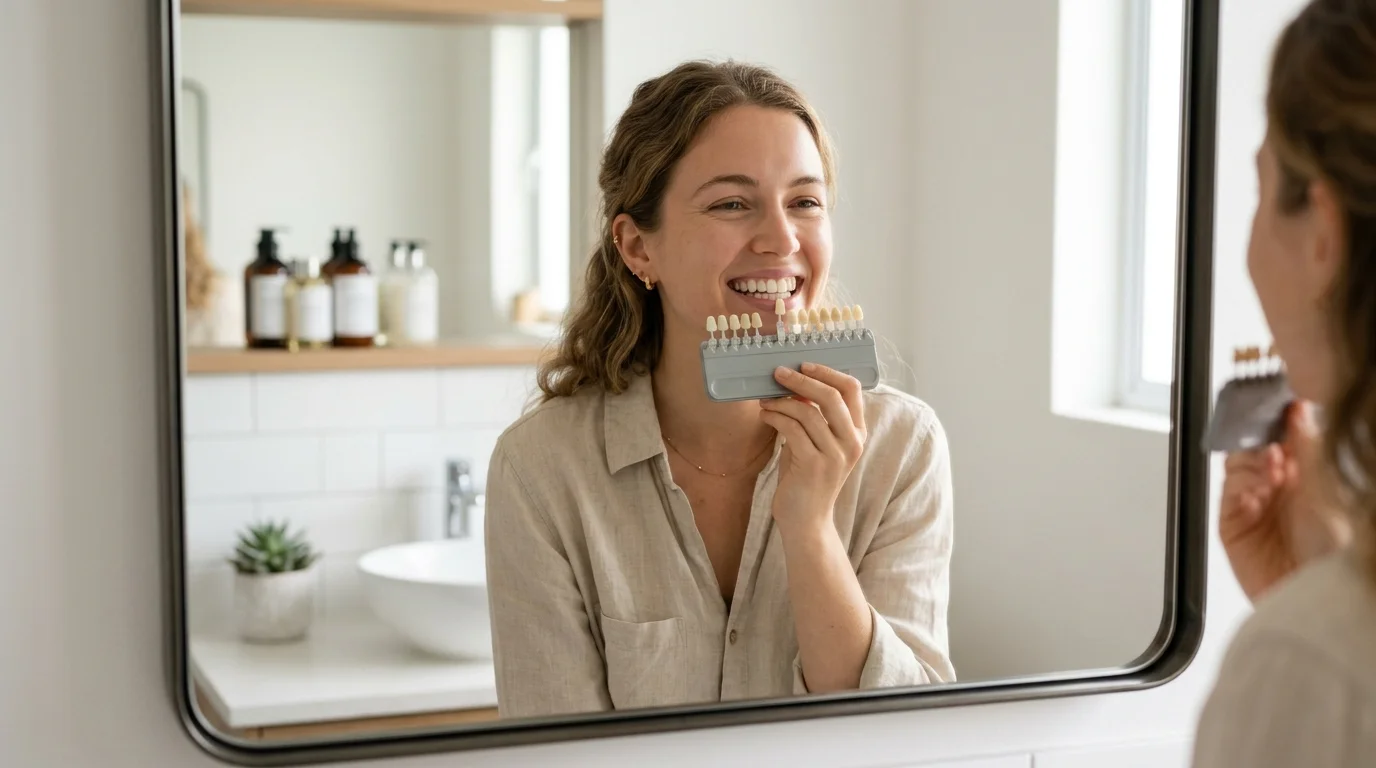
No, teeth whitening isn’t permanent. Results typically last anywhere from a few months to about 3 years, depending on the method used and how well you maintain it afterward. This isn’t because the whitening “wears off” in the way a fresh coat of paint would it’s because new staining continues to accumulate the moment you go back to eating, drinking, and living normally.
Why Whitening Fades (It’s Not Really “Wearing Off”)
Whitening works by using peroxide to bleach the pigmented molecules (chromogens) causing discoloration in your enamel and the layer beneath it. Once that’s done, your teeth are genuinely lighter but the same things that stained them the first time (coffee, tea, red wine, smoking, everyday plaque buildup) start working on your teeth again immediately. What people experience as whitening “fading” is really new staining slowly building back up on top of a tooth that hasn’t gotten any darker on its own.
This distinction matters because it explains why lifestyle habits after whitening affect your results far more than the whitening method itself.
How Long Each Method Actually Lasts
| Method | Typical Duration | Why |
|---|---|---|
| Whitening strips (OTC) | A few weeks to a few months | Lower peroxide concentration, surface-level effect |
| Take-home trays from a dentist | 6 months to 1+ year | Custom-fit trays and prescription-strength gel improve consistency |
| In-office professional whitening | 1 to 3 years | Highest concentration, professionally controlled and monitored |
| Any method, with heavy coffee/tea/smoking | Shorter than the ranges above | Staining habits work against the results faster |
| Any method, with good habits and touch-ups | Can extend toward the higher end | Consistent maintenance meaningfully slows the fade |
The pattern here is straightforward: the stronger and more professionally controlled the treatment, the longer it tends to last but your daily habits afterward matter just as much as which method you choose.
What Actually Determines How Long Yours Will Last
- Your diet coffee, tea, red wine, dark berries, and soy sauce are the most common culprits for new staining
- Smoking or tobacco use significantly accelerates re-staining regardless of whitening method
- Your enamel’s natural porosity some people’s enamel simply picks up stains faster than others, independent of habits
- How consistently you maintain oral hygiene regular brushing, flossing, and professional cleanings slow the buildup of new surface stains
- Whether you do periodic touch-ups a quick refresh treatment every several months to a year extends results considerably compared to a one-and-done approach
Who Isn’t a Good Candidate (Regardless of Method)
- Anyone under 16-18, since tooth development isn’t complete and whitening isn’t recommended until it is
- Pregnant or breastfeeding individuals
- Anyone with untreated cavities, gum disease, or active dental infection these should be addressed first
- People looking to whiten crowns, veneers, fillings, or dentures whitening only affects natural tooth enamel, and won’t change the color of existing dental work
Why Where You Get It Done Matters
This is worth taking seriously: professional whitening whether an in-office treatment or a dentist-prescribed take-home kit uses carefully controlled peroxide concentrations under supervision. Whitening from unregulated sources (some salons, unregulated online kits) uses the same category of strong chemicals without professional oversight, which meaningfully increases the risk of gum irritation, uneven results, or enamel damage. If you’re going to invest in whitening, doing it through a dental professional protects both your results and your teeth.
Common Side Effects (And Why They’re Usually Temporary)
- Tooth sensitivity to hot, cold, or sweet food the most frequently reported side effect, usually resolving within a few days after treatment
- Gum irritation or soreness if whitening gel contacts gum tissue typically short-lived, especially with professional application using a protective barrier
- Uneven results near existing dental work since crowns, veneers, and fillings won’t lighten, they can appear more noticeable by comparison after whitening natural teeth around them
How to Make Your Results Last as Long as Possible
- Use a straw for staining beverages when possible
- Rinse with water after coffee, tea, or wine rather than letting it sit on your teeth
- Wait 30-60 minutes before brushing after acidic foods or drinks, to avoid brushing softened enamel
- Keep up with twice-daily brushing and daily flossing
- Get professional cleanings on schedule to clear surface staining before it builds up
- Ask your dentist about a touch-up schedule a brief refresh every 6-12 months maintains results far more effectively than waiting until color has fully faded
If you’re dealing with yellowing that’s more internal than surface-level, it’s worth understanding the difference between staining that reverses easily and discoloration that needs a different approach before choosing a whitening method.
FAQ
Is there any whitening method that’s actually permanent?
No, all whitening methods lighten existing stains, but new staining continues to accumulate afterward regardless of method. None create a permanent, unstained result.
Does in-office whitening last longer than at-home kits?
Generally, yes. Professional in-office treatments use stronger, more controlled concentrations and tend to produce longer-lasting results than over-the-counter strips.
Can I whiten my teeth again once results fade?
Yes, most people can safely repeat whitening treatments periodically, though your dentist should confirm timing based on your enamel health and treatment history.
Why do my teeth look less white just a few weeks after strips?
Over-the-counter strips use a lower peroxide concentration, so results are naturally shorter-lived compared to professional treatments, especially without following up with good habits.
Will whitening work on a tooth with a crown or filling?
No, whitening only affects natural enamel. Existing dental work stays the same color, which can create a visible mismatch after whitening surrounding natural teeth.
Curious How Long Whitening Would Actually Last for You?
How long your results last depends on your specific teeth, habits, and which method fits you best. Summer Smile Dental in South Gate can walk you through your options and help you get the longest-lasting results for your smile. Schedule a consultation today.