
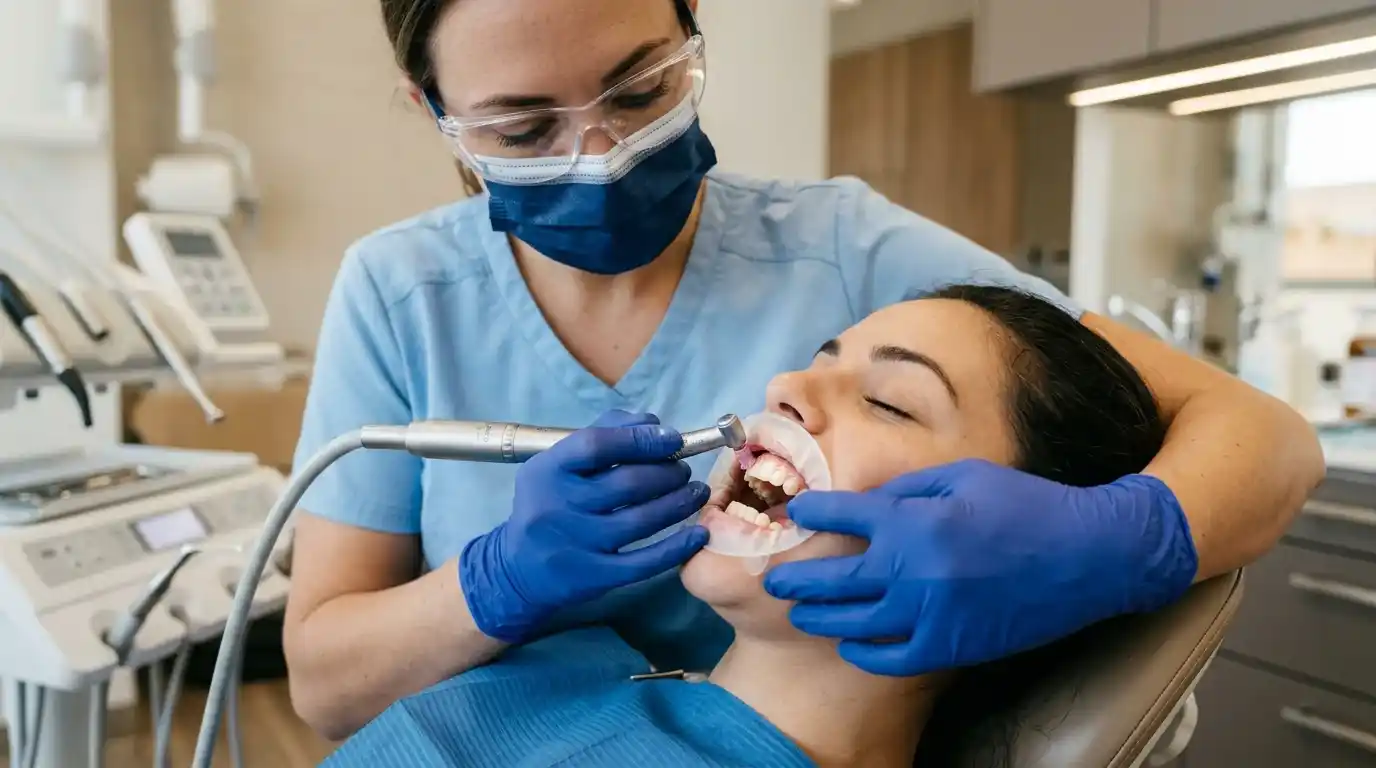
Dental bonding typically lasts 3 to 10 years before it needs touching up or replacing. That’s a wide range, and where you actually land within it depends heavily on where the bonding is in your mouth, your daily habits, and how well you care for it not just luck.
Why the Range Is So Wide
Bonding uses a composite resin that’s more porous and less durable than natural enamel or porcelain, which is why it doesn’t match the 10-20 year lifespan of veneers or crowns. But within that 3-10 year window, several specific factors determine where you’ll actually fall:
Location in your mouth matters a lot. Bonding on front teeth generally lasts longer, since those teeth handle much less direct chewing force than molars. Bonding on back teeth, which absorb significant bite pressure, tends to wear or chip sooner often landing toward the lower end of the range.
How many teeth were treated and why. A small chip repair on one tooth tends to hold up differently than bonding used to reshape or cover a larger area, simply due to how much surface area is exposed to daily wear.
Your bite and habits. Grinding, clenching, nail-biting, chewing ice, or using your teeth to open packages all accelerate wear and chipping regardless of how well the bonding was originally placed.
Diet. Coffee, tea, red wine, and other staining foods and drinks don’t shorten the material’s structural lifespan directly, but they do affect how quickly it looks worn or discolored often prompting a touch-up before the bonding has actually failed structurally.
How well it was placed initially. Technique matters a well-bonded, properly shaped, and polished repair tends to hold up better and longer than one placed hastily.
Your oral hygiene routine. Bonding doesn’t decay itself, but the natural tooth underneath and around its edges can, especially without consistent brushing and flossing untreated decay can undermine the bonding’s foundation.
Front Teeth vs. Back Teeth: A Real Difference
| Front Teeth Bonding | Back Teeth Bonding | |
|---|---|---|
| Typical bite force exposure | Low | High |
| Typical lifespan | Toward the higher end (6-10 years) | Toward the lower end (3-6 years) |
| Most common failure mode | Staining, minor edge wear | Chipping, wearing down from chewing |
| Touch-up frequency | Less frequent | More frequent, especially without a night guard |
Signs Your Bonding Is Wearing Down
- A rough edge or texture you can feel with your tongue
- Visible staining or discoloration compared to your natural teeth
- A small chip or crack, even if it’s not causing pain
- The bonding feels like it’s “catching” on floss in one specific spot
- A noticeable color mismatch that’s developed since it was placed
None of these mean the bonding has completely failed most are addressed with a straightforward polish or touch-up rather than a full redo.
How to Get Bonding Toward the Longer End of the Range
- Avoid biting nails, ice, or using your teeth to open packages the most common causes of premature chipping
- Wear a night guard if you grind or clench your teeth, especially for bonding on back teeth
- Use a non-abrasive toothpaste to avoid dulling the surface over time
- Limit staining foods and drinks, or rinse with water afterward
- Brush and floss normally, paying attention to the edges where bonding meets your natural tooth
- Keep up with regular checkups a hygienist can spot early wear and polish it before it becomes a bigger repair
What Actually Happens When Bonding “Wears Out”
Bonding failure is rarely dramatic it’s usually gradual staining, a small chip, or a rough spot rather than the whole thing suddenly falling off. In most cases, your dentist can repair or touch up the existing bonding rather than starting over completely, unless the damage is more extensive. This is one of bonding’s real advantages over veneers or crowns: minor issues are typically quick, inexpensive fixes rather than a full redo.
When It’s Time for a Full Replacement vs. a Touch-Up
Touch-up is usually enough for: minor staining, a small rough edge, slight color mismatch, or a very small chip.
Full replacement is more likely needed for: a significant crack, a large portion that’s chipped away, persistent sensitivity in the tooth, or bonding that’s been touched up multiple times already and is now structurally compromised.
If you’re weighing whether bonding is worth it in the first place, it’s also worth understanding how well it actually holds up for the specific kind of chip or repair you’re considering.
FAQ
Does bonding on molars really wear out faster than front teeth?
Yes back teeth absorb significantly more chewing force, which tends to shorten bonding’s lifespan there compared to front teeth.
Can I extend my bonding’s lifespan with a night guard even if I don’t think I grind my teeth?
If your dentist has noted signs of wear consistent with grinding, a night guard is worth discussing many people grind unknowingly during sleep.
Is it normal for bonding to need a touch-up before the 3-year mark?
It can happen, especially on back teeth or with habits like nail-biting or ice-chewing, but it’s worth mentioning to your dentist if it’s happening unusually early.
How do I know if my bonding needs a touch-up or a full redo?
Minor staining or a small rough spot usually just needs polishing or a small repair; visible cracks or significant chipping typically mean a fuller replacement.
Does bonding on front teeth ever last the full 10 years?
Yes, especially with good habits, low bite-force exposure, and regular care front teeth bonding is the most likely candidate to reach the higher end of the range.
Wondering Where Your Bonding Currently Stands?
The only way to know for sure whether your bonding needs a touch-up, a repair, or nothing at all is a quick check. Summer Smile Dental in South Gate can take a look and let you know exactly what it needs. Schedule an appointment today.