
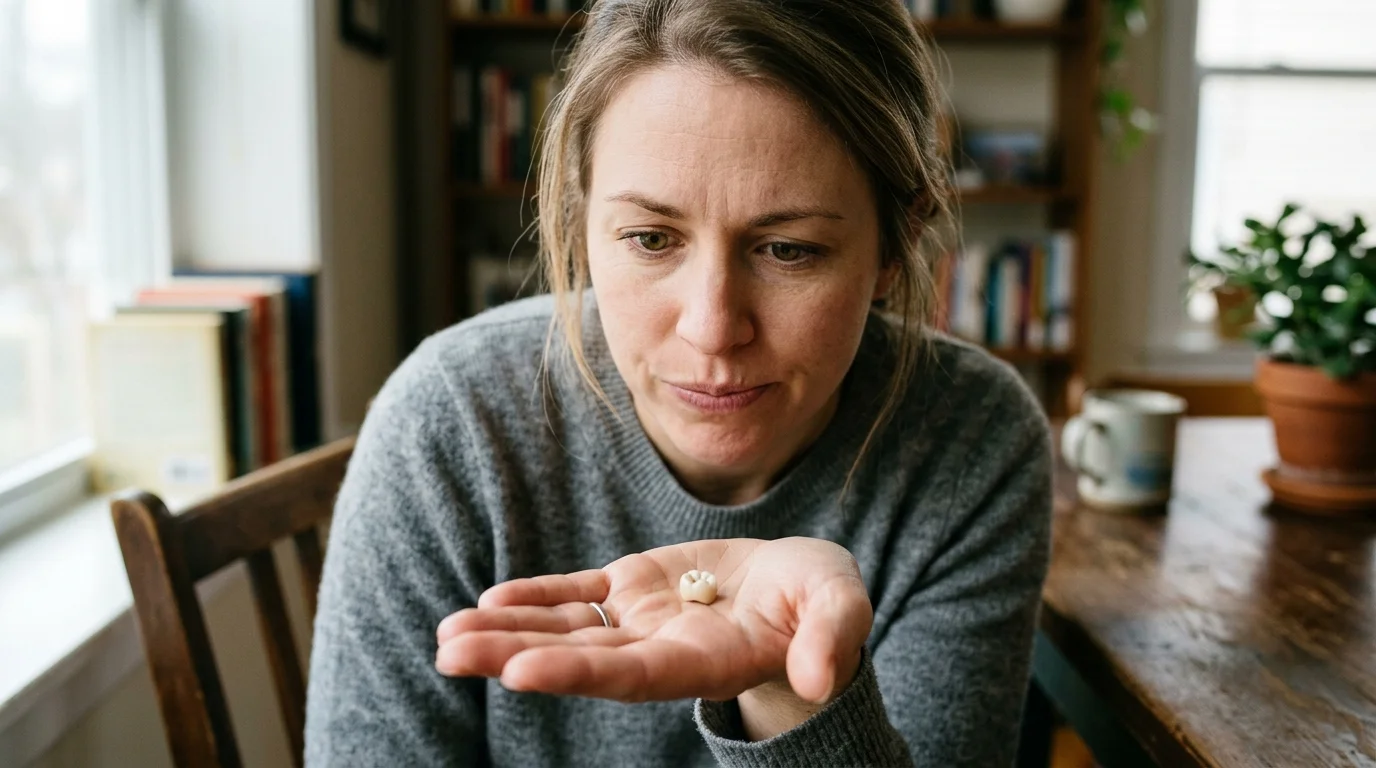
A crown falling out without pain is actually a good sign, but it’s not a reason to wait. No pain usually means the exposed tooth structure isn’t currently irritating an exposed nerve but the tooth is still unprotected, and that can change quickly. Here’s why it doesn’t hurt, what to do right now, and how soon you actually need to get it looked at.
Why It Might Not Hurt
If the tooth already had a root canal. Many crowned teeth have had a root canal at some point, which means the nerve inside was already removed. Without a live nerve, there’s nothing left to signal pain even with the tooth structure exposed this is one of the most common reasons a fallen crown doesn’t hurt.
If the exposed area isn’t near the nerve yet. Even without a root canal, if the crown covered decay or a repair that wasn’t deep enough to reach the nerve, the exposed dentin underneath may not be sensitive enough yet to cause noticeable pain.
If the crown came off cleanly. A crown that separates from the cement without taking tooth structure or triggering new decay exposure tends to cause less immediate sensitivity than one that comes off due to a break or fracture in the tooth itself.
Important: none of this means the situation is stable long-term. Painless right now doesn’t mean the tooth is safe from here it means you currently have a window to act before it becomes painful or complicated.
What to Do Right Now
1. Find and save the crown, if you can. Don’t touch the inner surface if you can avoid it this helps your dentist assess it and potentially reattach it. Store it in a small clean container or bag.
2. Rinse gently with warm salt water. This helps clean the area and reduce bacteria without irritating the exposed tooth.
3. Keep the area clean, but be gentle. Brush normally elsewhere, but be careful around the exposed tooth rather than scrubbing directly on it.
4. Stick to soft foods, and chew on the other side. The exposed tooth structure is more vulnerable to damage and temperature sensitivity than a protected one, even without active pain right now.
5. Do not try to reattach it yourself. Over-the-counter dental cement, denture adhesive, or household glue can trap bacteria underneath and make the situation significantly worse, even if it seems like it’s holding the crown in place temporarily.
6. Call your dentist don’t wait for pain to start. This is the step people skip when nothing hurts, and it’s the one that matters most.
Why “No Pain” Doesn’t Mean “No Rush”
The tooth is exposed to bacteria. Without the crown’s protective seal, bacteria has direct access to the tooth structure underneath and if there’s a live nerve involved, this can lead to a new infection or cavity that wasn’t there before, or a worsening of the original problem that led to the crown in the first place.
Sensitivity can develop suddenly. Exposed dentin (the layer under enamel) is porous, and it can go from feeling fine to reacting sharply to hot, cold, or sweet with very little warning as it’s exposed to your normal diet.
Neighboring teeth can shift. Teeth work together to hold their position. A tooth without its full crown structure especially if it’s now a slightly different shape or height can allow gradual shifting in the bite over time the longer it’s left unaddressed.
A simple fix can become a complex one. If the crown and tooth are both still in good condition, your dentist may just clean and re-cement it often the easiest, least expensive outcome. Wait too long, and new decay or a fracture can turn that into needing a new crown, a root canal, or even an extraction.
How Soon Should You Actually Get In?
Aim to be seen within a few days even without pain. This isn’t a middle-of-the-night emergency in most painless cases, but it’s also not something to schedule for “whenever” the entire advantage of catching this early is that the tooth is currently stable, and that window doesn’t stay open indefinitely.
Get in sooner (same day, if possible) if:
- The crown was covering a tooth that’s had significant prior dental work
- You notice a sharp edge or visible crack in the remaining tooth structure
- Any sensitivity starts, even mild
- The exposed tooth looks discolored or has visible debris packed into it
What Happens at Your Appointment
Your dentist will check the health of the tooth underneath, take an X-ray to look for hidden decay or issues below the surface, and examine your saved crown to see if it can simply be recemented. If the tooth and crown are both in good shape, that’s often the outcome quick and straightforward. If there’s new decay, a crack, or the original crown doesn’t fit as well anymore, you may need a new crown, or in more involved cases, further treatment like a root canal.
If you end up needing a new crown rather than a simple re-cementing, it’s worth knowing that the replacement process itself is generally quick and comfortable, thanks to local anesthetic used throughout.
FAQ
Is it normal for a crown to fall out with zero pain?
Yes, especially if the tooth previously had a root canal, since there’s no living nerve left to react to the exposed area.
Can I just leave it a few weeks since it doesn’t hurt?
It’s not recommended the exposed tooth is vulnerable to new decay and bacteria the entire time, and painless now doesn’t guarantee it stays that way.
Can my dentist just glue the same crown back on?
Often, yes, if the crown and the tooth underneath are both still in good condition. This is why saving the crown and getting in soon matters it keeps that simpler option available.
What if I accidentally swallowed the crown?
In most cases, it will pass through your digestive system without issue over a day or two. Contact a doctor promptly if you experience difficulty breathing, coughing, or abdominal pain, and still follow up with your dentist about the exposed tooth.
Will insurance cover replacing or recementing a fallen crown?
Coverage varies by plan it’s worth calling your provider or bringing your insurance details to your appointment so the office can check for you.
Crown Fell Out and Not Sure What’s Next?
Even without pain, the tooth underneath needs protection sooner rather than later. Summer Smile Dental in South Gate can get you in quickly, check the tooth, and get your crown handled the easy way if possible. Schedule an appointment today.