
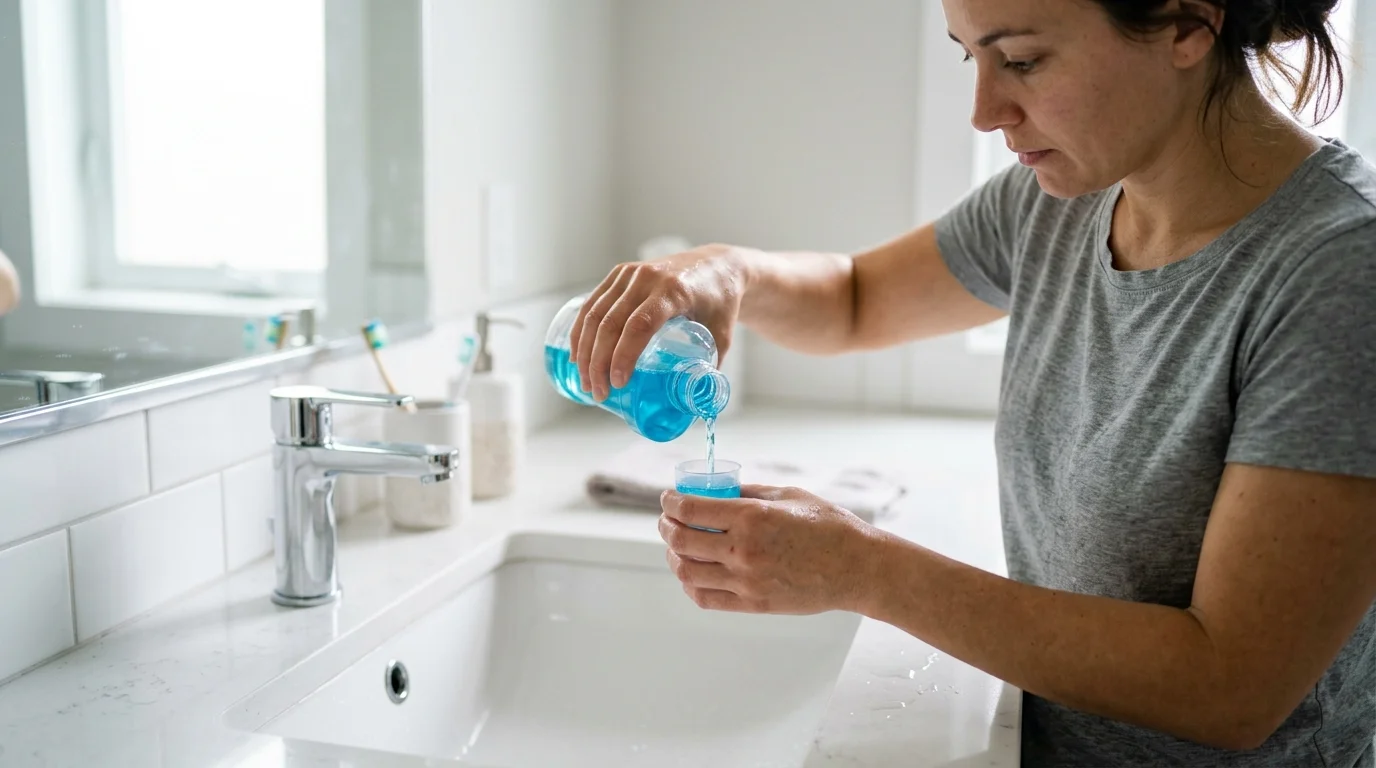
Most mouthwashes are meant to be used once or twice a day, though the exact frequency depends on the type you’re using and what it’s meant to do. More frequent use isn’t automatically better some mouthwashes are meant for short-term, targeted use, and overusing certain types can cause side effects like staining or dryness.
Here’s how often each type is actually meant to be used.
Frequency by Type of Mouthwash
Cosmetic mouthwash (freshens breath only, no active ingredients): Can be used as often as you’d like, since it’s primarily masking odor rather than treating anything though it shouldn’t be relied on as a substitute for brushing and flossing.
Fluoride mouthwash: Typically once or twice daily, usually recommended at a different time than brushing so the fluoride isn’t immediately rinsed away.
Antiseptic/antibacterial mouthwash (like most standard Listerine-type products): Usually twice daily, following the specific product’s instructions this frequency is based on how long the active ingredients stay effective against bacteria in your mouth.
Prescription-strength chlorhexidine mouthwash: Typically used for a limited, specific period (often two weeks) as directed by your dentist, not as a daily long-term habit extended use carries a higher risk of staining and taste changes.
Alcohol-based mouthwash generally: Fine for most adults within label instructions, but should be avoided for children and by pregnant people, and used cautiously by anyone sensitive to alcohol.
The clearest rule: check the product’s label and follow it. Frequency is tied to that specific formula’s concentration and purpose, not a universal number that applies to every bottle on the shelf.
Does Using Mouthwash Too Often Cause Problems?
Overusing certain mouthwashes can lead to a few real downsides:
- Staining. Some formulas can discolor teeth over just a few weeks of frequent use, since certain ingredients bind to the tooth surface.
- Altered taste. Some people notice changes in taste perception with heavier or prolonged use.
- Dryness or irritation, particularly with alcohol-based formulas used more often than intended.
- Microbiome disruption. Mouthwash changes the balance of bacteria in your mouth, but on a short-term, typical-use basis, there’s little evidence this causes meaningful harm. This becomes more of a consideration with frequent, long-term, high-concentration use rather than standard daily use.
When Mouthwash Won’t Help, No Matter How Often You Use It
This is worth knowing before you assume more frequent rinsing will solve a problem: mouthwash needs to be used before issues develop. Once gum disease has progressed, or bacteria have hardened into tartar on your teeth, mouthwash can no longer reach or resolve the problem only a professional cleaning and, in more advanced cases, further periodontal treatment can. Using mouthwash more often at that point won’t compensate for the underlying issue needing dental treatment.
The same applies to persistent bad breath: mouthwash may mask it temporarily, but if it’s caused by gum disease, a cavity, or something unrelated to your mouth, more frequent rinsing just delays finding the actual cause.
Should You Use Mouthwash Before or After Brushing?
This trips a lot of people up. If you’re using a fluoride mouthwash, using it at a separate time from brushing (not immediately after) helps avoid rinsing away the fluoride your toothpaste just left behind some dentists recommend using it after lunch or at a different point in the day entirely. For antiseptic mouthwash, timing relative to brushing matters less, though many people prefer using it after to clear away any loosened debris.
A Simple Way to Choose the Right One for You
- Preventing cavities: Look for a fluoride rinse
- Gingivitis or early gum concerns: Look for one targeting gum inflammation specifically, and check with your dentist
- Bad breath as your main concern: A standard antibacterial rinse can help temporarily, but persistent bad breath needs its actual cause addressed
- Sensitive to alcohol, pregnant, or have children at home: Choose an alcohol-free formula
- Recently had gum surgery or wear braces: Ask your dentist about a temporary rinse to support hygiene where brushing is harder to do thoroughly
These are general guidelines for everyday use, but that timing gets more specific if you’re recovering from something like a tooth extraction, where introducing mouthwash too early can actually interfere with healing.
FAQ
Can I use mouthwash three or four times a day?
For some formulas, yes this is within the normal range for certain antiseptic mouthwashes depending on product instructions, but always defer to the specific label rather than assuming more is automatically better.
Is it bad to use mouthwash every single day?
For most standard, over-the-counter formulas, daily use as directed is considered safe. Prescription-strength rinses are the exception, typically meant for short, defined periods rather than indefinite daily use.
Does mouthwash replace brushing and flossing?
No it’s a supplement, not a substitute. It doesn’t remove plaque or tartar, so brushing and flossing remain essential regardless of how often you rinse.
Will mouthwash fix chronic bad breath?
Only temporarily, if at all. Persistent bad breath usually has an underlying cause gum disease, a cavity, or something unrelated to your mouth that mouthwash can’t resolve on its own.
Is alcohol-free mouthwash just as effective?
Yes, for most people alcohol isn’t what makes a mouthwash effective against bacteria, so alcohol-free versions can offer similar benefits without the drying effect.
Not Sure Which Mouthwash or Routine Is Right for You?
Everyone’s mouth is a little different, and the right mouthwash (and how often to use it) depends on your specific needs. Summer Smile Dental in South Gate can help you build a routine that actually fits your oral health. Schedule an appointment today.