
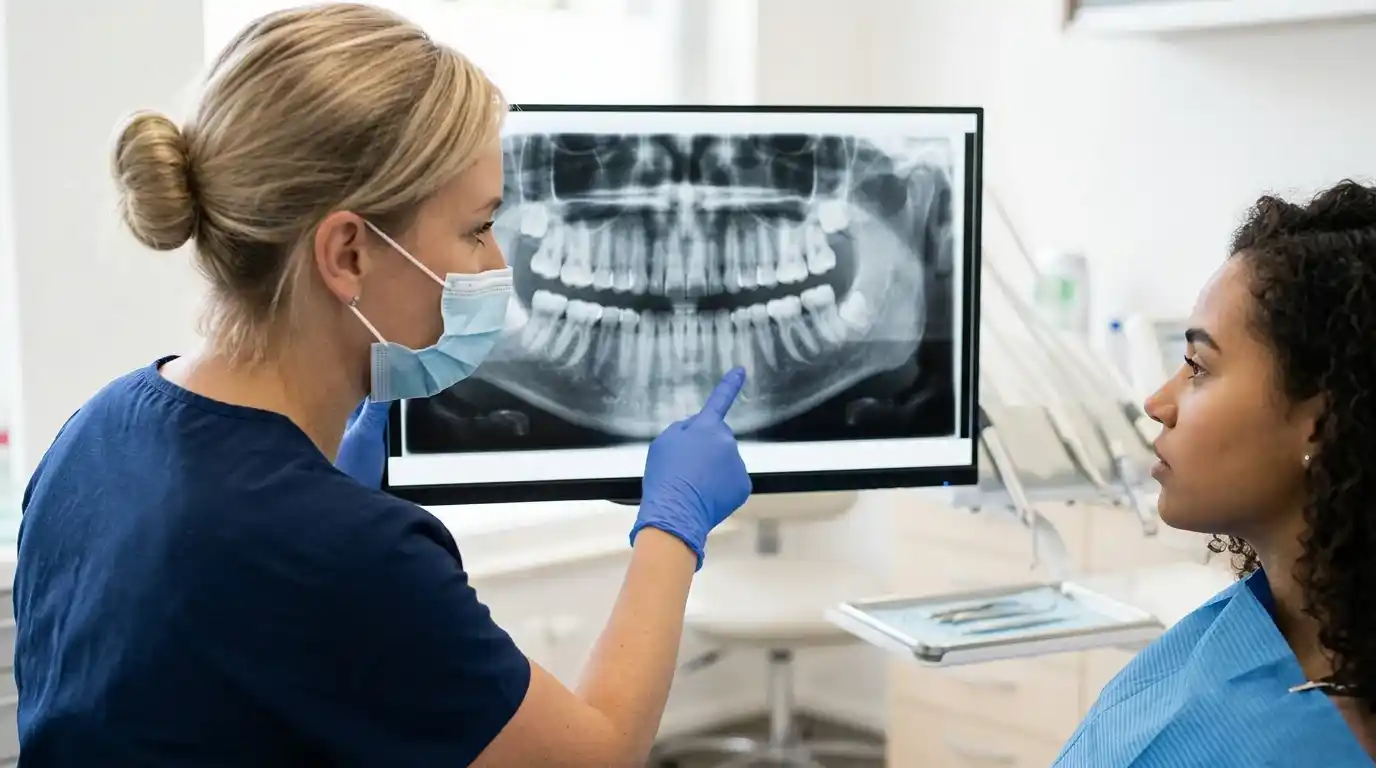
Most people feel back to normal within a few days to two weeks after root canal retreatment but that’s different from the tooth being fully healed. Retreatment is addressing an infection or issue that didn’t fully resolve the first time, so the underlying bone and tissue around the root tip can take several months, sometimes up to a year, to fully heal something only confirmed with a follow-up X-ray, not by how you feel.
Here’s how those two timelines actually work.
Timeline 1: Feeling Normal Again (Days to Two Weeks)
Days 1-3: Mild soreness, tenderness when biting, and some swelling are common, especially since retreatment often requires removing an existing crown, post, or filling material to access the canals a more involved process than a first-time root canal. Over-the-counter pain relief, as directed, usually manages this comfortably.
Days 4-7: Most day-to-day discomfort noticeably fades. Chewing on the treated side may still feel slightly off, especially with only a temporary filling in place.
Week 2: Most people report feeling essentially normal, assuming no complications and a permanent crown or restoration has been placed as recommended.
This short-term recovery is largely about the mechanical trauma of the procedure itself healing the gum and tissue around the tooth settling down. It’s not the same as the underlying reason you needed retreatment being resolved.
Timeline 2: The Tooth Actually Healing (Months, Confirmed by X-Ray)
This is the part almost every source skips. Retreatment is typically necessary because of one of these underlying issues:
- Bacteria that persisted in narrow or missed canals from the original treatment
- New decay or a cracked restoration that let bacteria back into the tooth
- An infection or abscess that developed at the root tip
Fixing the canal itself happens in the appointment but the bone that was affected by the infection takes time to regenerate and heal, independent of how you feel day to day. This process typically takes:
- 3-6 months for early signs of healing to appear on a follow-up X-ray
- Up to 12 months for more complex cases or larger areas of bone involvement to show full resolution
Your endodontist will schedule a follow-up X-ray, usually around the 6-month mark, specifically to confirm this deeper healing is progressing not just to check how you’re feeling. This is a normal and expected part of retreatment aftercare, not a sign something is wrong.
Why Retreatment Recovery Can Differ From a First-Time Root Canal
A tooth may not heal as expected after initial treatment for reasons like narrow or curved canals that went untreated, complicated canal anatomy that was missed the first time, delayed crown placement after the original treatment, or new decay exposing the filling material to bacteria. Because retreatment is essentially solving a more established, sometimes longer-standing problem and often involves removing existing restorative work first the procedure is generally more complex than the original treatment, which is part of why healing (both short and long-term) can take a bit longer than a first root canal.
What Helps Recovery Go Smoothly
- Get your permanent crown or restoration placed as soon as your endodontist recommends a tooth left with just a temporary filling for too long is vulnerable to new bacterial contamination, which can undermine the healing process
- Avoid chewing directly on the treated tooth until the permanent restoration is in place
- Keep up with brushing and flossing normally around the area
- Take any prescribed antibiotics for the full course, even if you feel fine
- Attend the follow-up X-ray appointment, even if you have zero symptoms this is the only way to confirm the deeper healing is on track
Signs Something Isn’t Healing as Expected
Contact your endodontist if you notice:
- Pain that’s getting worse instead of better after the first week
- Swelling that increases rather than subsides
- A bad taste, pus, or drainage near the tooth
- Ongoing sensitivity to biting pressure weeks after the procedure
- A fever
As with any dental procedure, there are no guarantees retreatment has a strong success rate, but it’s not 100%, which is exactly why the follow-up X-ray step matters.
What If Retreatment Doesn’t Fully Resolve the Issue?
If nonsurgical retreatment isn’t successful or possible, endodontic surgery may be recommended, which addresses the tip of the root directly through a small incision. The only other alternative at that point is extraction, typically followed by replacing the tooth with an implant, bridge, or partial denture. Because those options involve more extensive procedures, they’re often more costly and time-consuming than saving the natural tooth through retreatment.
Since retreatment often means removing an existing crown to access the canals again, it’s worth understanding how infection can develop around or beneath a crown in the first place especially if you’re wondering why your first treatment didn’t fully resolve things.
FAQ
How long until I can eat normally after retreatment?
Most people can eat on the treated side within a week or two, once initial soreness resolves though you should avoid hard or chewy foods on that tooth until any permanent restoration is placed.
Does feeling fine mean the retreatment worked?
Not necessarily. Feeling normal reflects short-term healing of the procedure itself; whether the underlying infection has actually resolved is confirmed through a follow-up X-ray, typically months later.
Why does retreatment take longer to heal than my first root canal?
Retreatment is addressing a more established problem often an infection that didn’t fully resolve and the procedure itself is usually more involved, since old restorative material typically needs to be removed first.
What if the follow-up X-ray shows it’s still healing?
This can be normal, especially for larger areas of bone involvement your endodontist will typically recommend continued monitoring before considering it fully resolved or discussing next steps.
Is retreatment recovery painful?
Most people experience mild to moderate soreness for a few days, generally manageable with over-the-counter pain relief significant or worsening pain after the first week isn’t typical and is worth reporting.
Recovering From Retreatment or Considering It?
Whether you’re currently healing from retreatment or trying to understand what to expect, it helps to have a clear picture of both timelines involved. Summer Smile Dental in South Gate can walk you through your specific case and coordinate any follow-up care you need. Schedule an appointment today.