
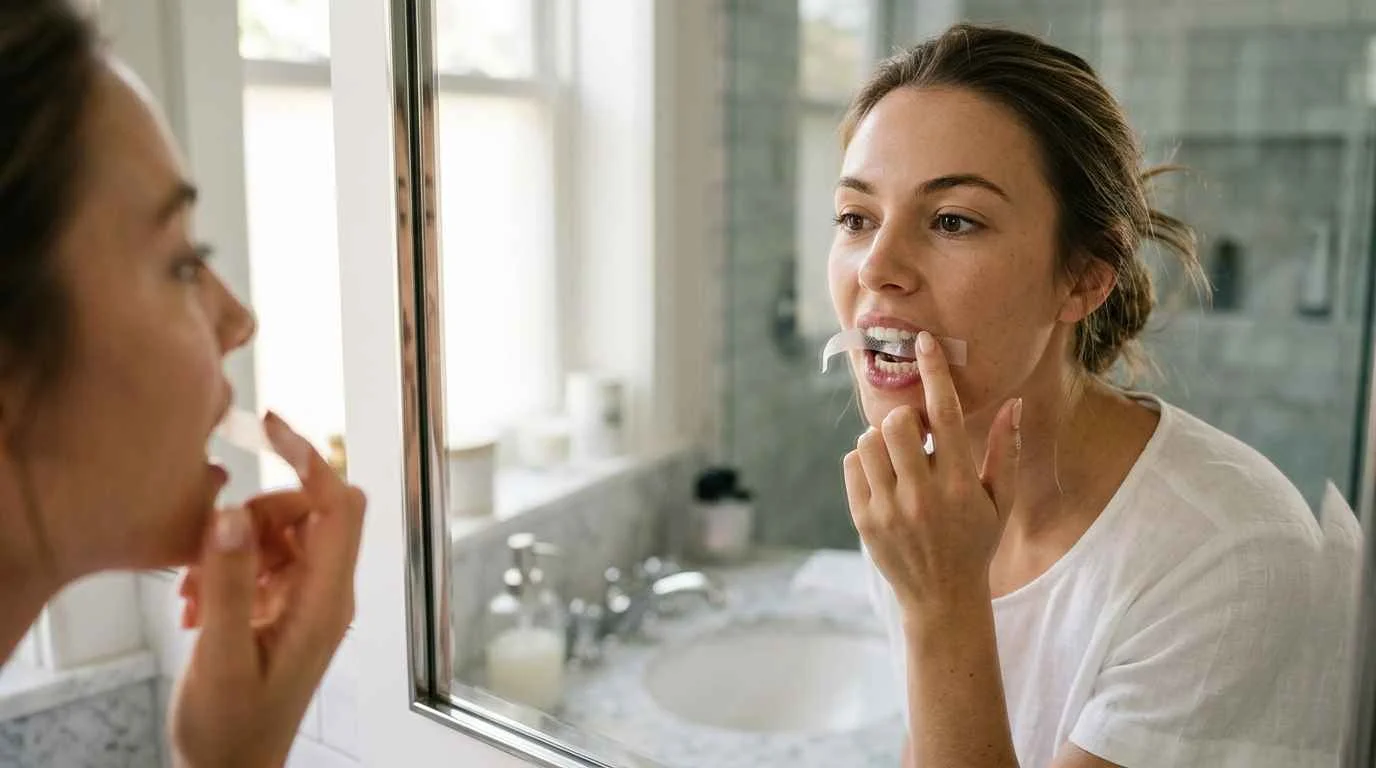
Whitening strips work by using a peroxide gel usually hydrogen peroxide or carbamide peroxide that penetrates your enamel and the layer underneath it (dentin) to chemically break down the pigmented molecules causing stains. It’s not a surface polish or a coating; it’s an actual chemical reaction happening inside your tooth structure.
Here’s exactly how that process works, what it can and can’t fix, and what to know before you start.
The Actual Chemistry Behind Whitening
Whitening strips are thin, flexible strips coated with a peroxide-based gel, molded to sit against your teeth and hold that gel in place. Carbamide peroxide, used in many strips, breaks down into hydrogen peroxide once it contacts water in your saliva hydrogen peroxide is the active bleaching ingredient either way.
Once in contact with your tooth, the peroxide penetrates through the enamel and into the dentin layer beneath it, where it reacts with chromogens the pigmented molecules responsible for staining, both on the surface and deeper within the tooth. This chemical reaction breaks down those pigment molecules, which is what actually lightens the tooth’s color. This is why whitening strips can lighten stains that go deeper than the surface, not just wipe away something sitting on top of your teeth.
Two Types of Stains, and Which Ones Respond Best
Not all discoloration is the same, and this matters for how well strips will actually work for you:
Extrinsic staining sits on the outer surface of your tooth, caused by things like smoking, coffee, wine, dark berries, and certain antibiotics. This type of staining tends to respond quickly to whitening, since it’s more accessible to the peroxide.
Intrinsic staining exists inside the tooth structure itself, caused by aging-related enamel thinning, genetics, antibiotics taken during tooth development, high fluoride exposure in childhood, or developmental tooth conditions. Yellowish staining from aging typically responds well; some genetic or developmental discoloration responds more slowly or only partially.
The practical takeaway: if your staining is mostly from coffee, wine, or smoking, you’re likely to see solid results. If your discoloration is genetic, from a tooth development issue, or from childhood antibiotic use, strips may only offer a partial improvement and it’s worth setting that expectation before you start.
What Whitening Strips Can’t Fix
This is the part most people don’t realize until it’s too late: whitening strips only work on natural tooth enamel. They will not change the color of existing fillings, crowns, veneers, bridges, or implants. If you have visible dental work on a front tooth, whitening your natural teeth around it can actually make that restoration stand out more by comparison rather than blending in worth discussing with your dentist before starting if this applies to you.
How Strips Are Typically Used
Most whitening strip systems are applied twice a day for about 30 minutes at a time, over roughly two weeks, though this varies by product. You’ll generally start noticing a shade or two of lightening within a few days, with fuller results building over the full treatment period.
Why a Dentist Should Be in the Loop First
Whitening strips are sold over the counter, but there’s real value in checking in with your dentist before starting:
- Cavities and gum disease should be treated first. Whitening a tooth with an untreated cavity, or applying peroxide near inflamed gum tissue, can increase sensitivity and irritation significantly.
- Existing dental work won’t match. As mentioned above, your dentist can tell you upfront if whitening will create a noticeable mismatch with any crowns, veneers, or fillings you have.
- Sensitivity risk varies by person. If you already have sensitive teeth, your dentist can recommend a gentler approach or product, or suggest a desensitizing toothpaste routine before you start.
- Professional whitening may be a better fit for bigger goals. For more significant or stubborn staining, in-office treatments use stronger, professionally-controlled concentrations and can achieve results strips generally can’t match on their own.
Risks and Side Effects to Know About
- Tooth sensitivity is common, usually starting during treatment and lasting a few days this is the most frequently reported side effect.
- Gum irritation can occur if the gel contacts your gum tissue, typically resolving within a few days.
- Higher-concentration or extended use raises risk. Using strong concentrations or leaving strips on longer than directed increases the risk of both sensitivity and, in some studied cases, structural changes to enamel from demineralization.
- Avoid strips containing chlorine dioxide. Rather than hydrogen or carbamide peroxide, some whitening products (particularly from unregulated sources) use chlorine dioxide instead this has been associated with enamel damage and increased sensitivity, and isn’t the ingredient used in most reputable, ADA-recognized products.
How to Get the Best Results Safely
- Follow the product’s timing instructions exactly more time or more frequent use doesn’t mean better results, just more risk of sensitivity
- Avoid brushing immediately before applying strips, which can increase irritation
- Look for products with the ADA Seal of Acceptance, which confirms they’ve been evaluated for safety and effectiveness
- Limit staining foods and drinks (coffee, red wine, dark berries) during and after treatment to preserve results
- Use a straw for staining beverages, and rinse or brush soon afterward when possible
- Stop and check with your dentist if sensitivity becomes significant rather than just mild
One important caveat is worth knowing if you have or are considering dental bonding bonded teeth won’t lighten the same way your natural enamel does, so timing matters if you’re planning both treatments.
FAQ
How long do whitening strip results actually last?
Results vary based on your diet and habits, but many people notice fading within several months to a year, especially with regular coffee, tea, or wine consumption. Touch-up treatments are common.
Why didn’t whitening strips work as well as I expected?
This is often related to stain type intrinsic staining from genetics or tooth development responds less dramatically than surface staining from food, drinks, or smoking. It can also mean the concentration or duration wasn’t sufficient for your level of discoloration.
Can I use whitening strips if I have crowns or veneers on my front teeth?
You can, but only your natural teeth will lighten existing dental work won’t change color, which can create a visible mismatch. Worth checking with your dentist first.
Is it safe to use whitening strips every few months for touch-ups?
Occasional, properly-spaced use following product instructions is generally considered safe for most people, but frequent or back-to-back use raises the risk of sensitivity and enamel effects over time.
Are professional in-office treatments actually more effective than strips?
Generally yes, since professional treatments use stronger, controlled concentrations of peroxide and can be customized to your teeth strips are better suited for touch-ups and milder staining.
Curious Whether Whitening Strips Are Right for Your Smile?
Before you start a whitening routine, it’s worth having your teeth checked to make sure everything underneath looks good and to see whether strips or a professional treatment would actually get you the results you want. Summer Smile Dental in South Gate can help you figure out the best approach for your smile. Schedule a consultation today.